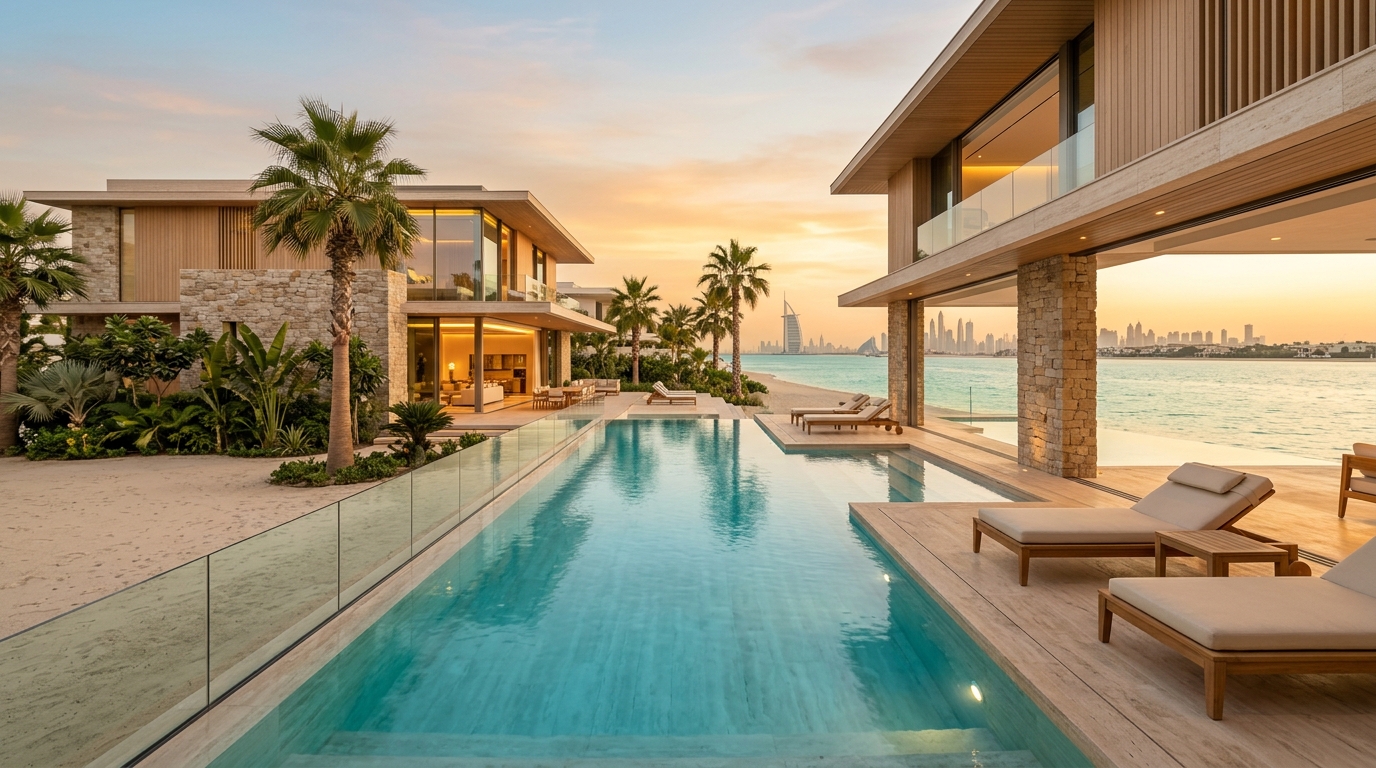
Palm Jebel Ali,the investment case, honestly
An early-stage, off-plan landmark asks for judgement, not just a spreadsheet. Here's the growth thesis, the pricing, and the risks worth weighing before you commit.
- Developer
- Nakheel
- Entry price
- From AED 2.5M (apartments)
- Villa entry
- From AED 18.5M (Beach)
- Payment plan
- 80/20, staged
- Handover
- Phased, 2027 onward
- Ownership
- Freehold, all nationalities
- Golden Visa
- Eligible (AED 2M+)
- Scale
- 16 fronds · ~2× Palm Jumeirah
Palm Jebel Ali is not a property you analyse the way you would a completed building with three years of rental history. It is an early-stage, off-plan landmark — a whole island being built at once — and that changes what due diligence actually looks like. The numbers that matter are qualitative as much as quantitative: who is building it, where it sits, how supply is constrained, and what the surrounding city is doing.
This guide lays out the case as we'd give it to a client sitting across the desk — the reasons to be interested, the pricing as it stands today, and, just as importantly, the risks that come with buying something years before it exists.
The investment case
Three things underpin the thesis. First, scarcity: Palm Jebel Ali is freehold beachfront on a man-made island with a fixed number of frond plots. Beachfront supply in Dubai is inherently limited, and the outer fronds in particular cannot be replicated once sold.
Second, timing. Every home is being sold off-plan at launch-phase pricing — set before the island's hotels, marinas, retail and beach clubs are operational. Historically, as each phase sells and amenities come online, later releases have priced above earlier ones. Buying early is, in effect, buying ahead of the island's own completion curve.
Third, direction of travel. The island anchors Dubai's southern growth corridor, beside Al Maktoum International (DWC) — being expanded into one of the world's largest airports — and Expo City. The city is actively building toward this axis, not away from it.
What's launched, and what it costs
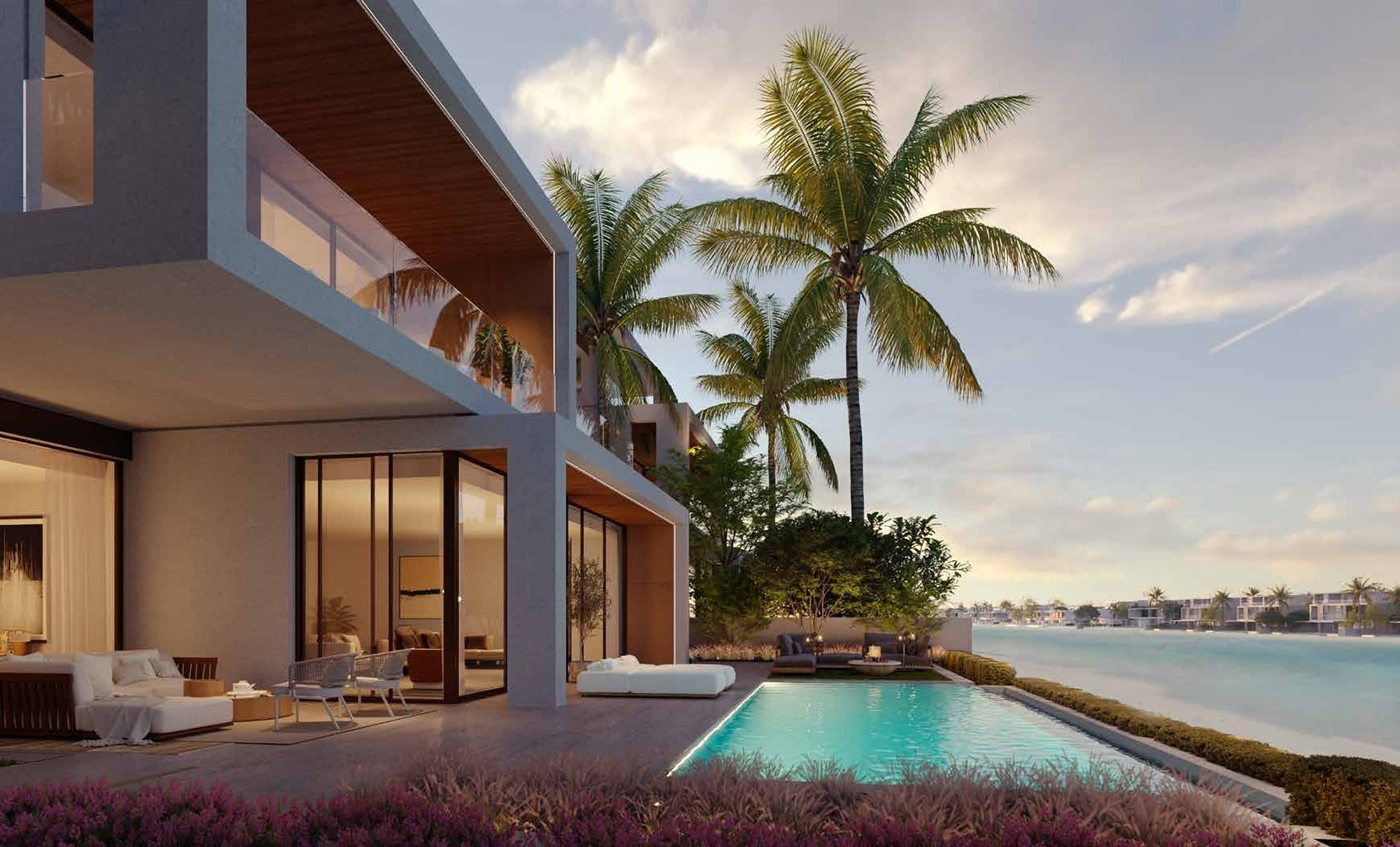
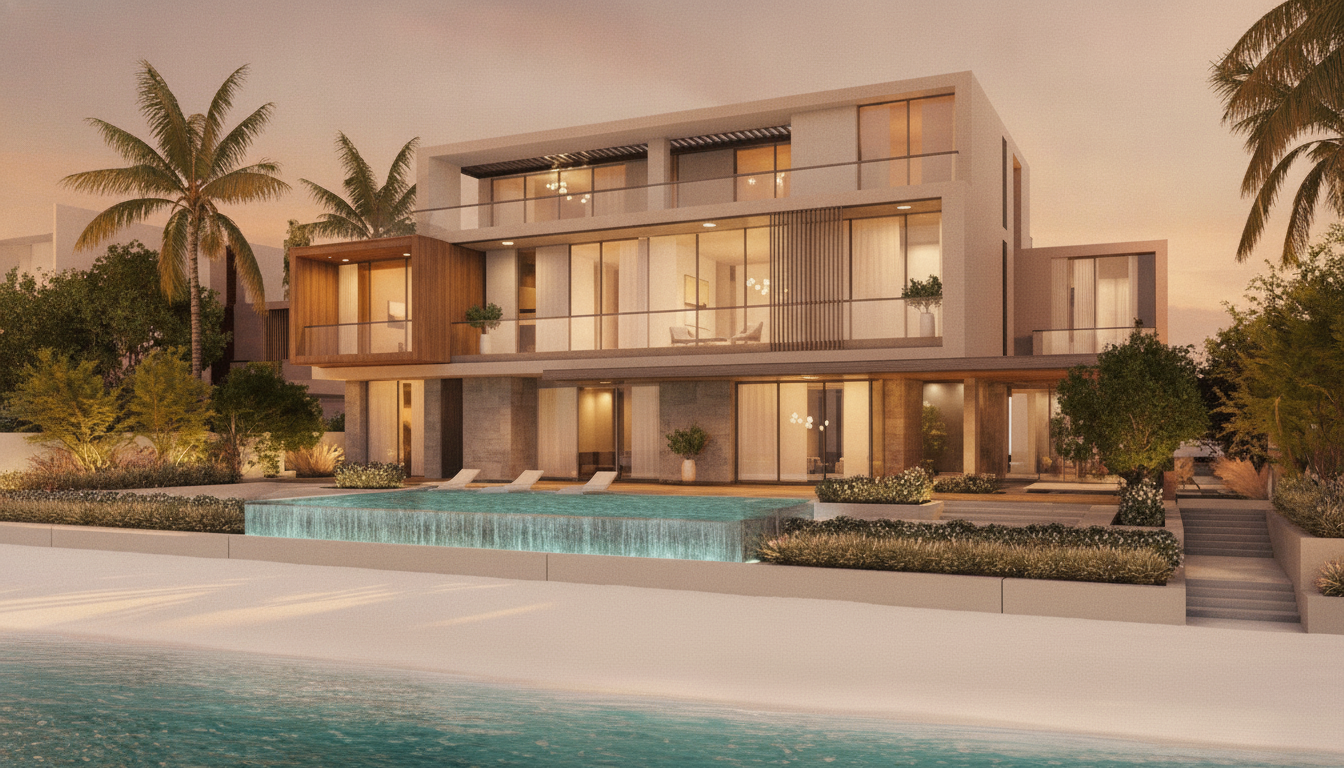
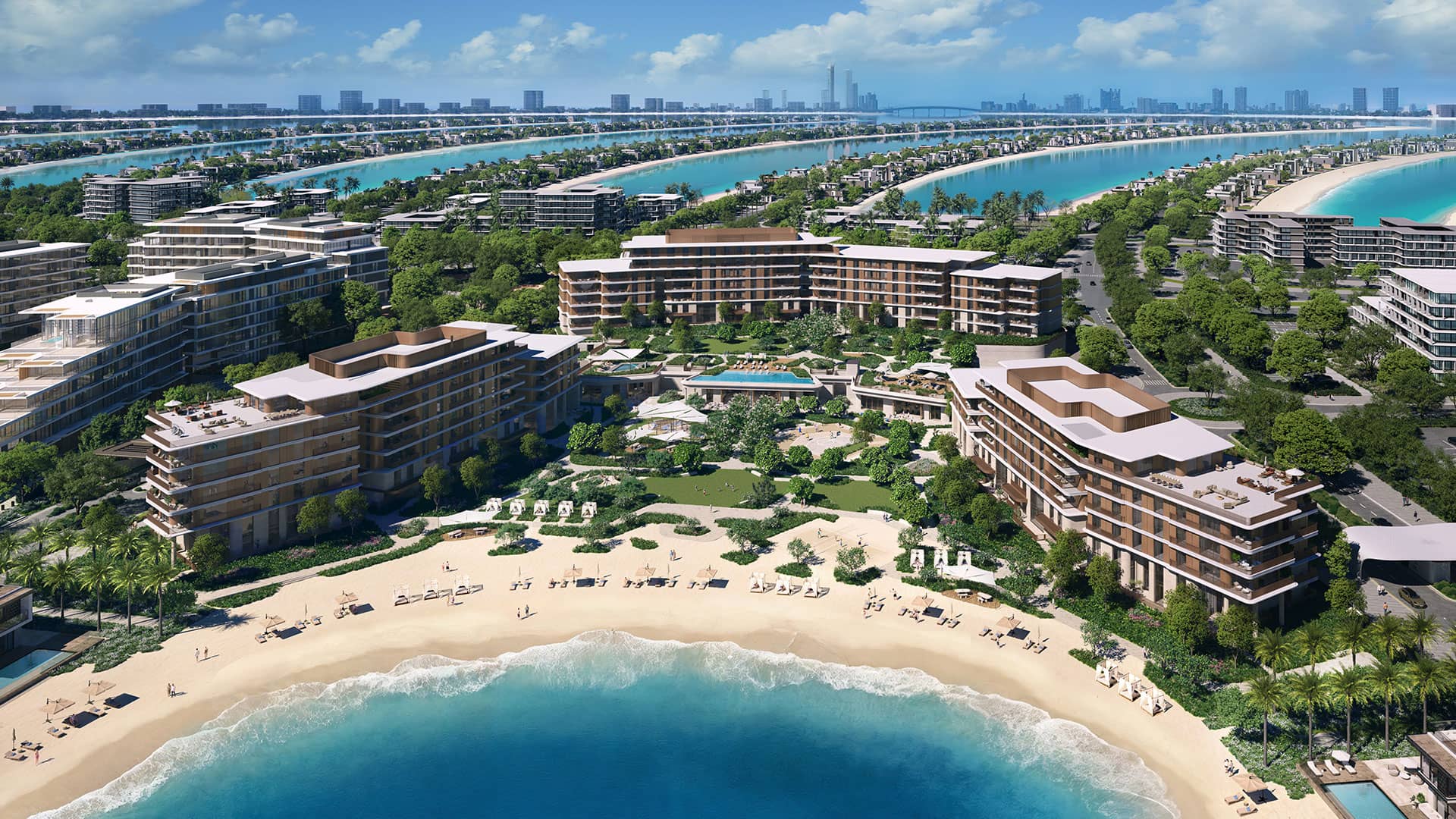
Three collections span the price spectrum, from resort-style apartments to ultra-prime signature mansions.
“You are not buying a finished address. You are buying a position on an island the city is still building around it.”
Location and connectivity
Palm Jebel Ali sits on Dubai's southern coastline beside Jebel Ali, tied to the mainland by three access points straight onto Sheikh Zayed Road (E11). Al Maktoum International is roughly 20 minutes away, Expo City is minutes down the road, and Dubai Marina and JBR are about 25 minutes north.
For years, 'southern Dubai' read as remote. That framing is dating quickly: the airport expansion, Expo City's transition into a permanent district, and continued infrastructure spend are pulling the city's centre of gravity in this direction. An address that feels peripheral today is being designed to sit near the middle of the next decade's Dubai.
Palm Jebel Ali vs Palm Jumeirah
The obvious comparison is the original. Palm Jumeirah is the proof of concept: a man-made island that became one of the most recognised — and most appreciated — addresses on earth. Palm Jebel Ali is roughly twice its footprint, with 16 fronds against Palm Jumeirah's tighter layout, and around 110km of new coastline.
The lesson investors draw from Palm Jumeirah is about the early buyers: those who committed at launch, before the island was proven, captured the largest gains. Palm Jebel Ali offers that same launch-stage entry — with the caveat that history rhymes rather than repeats, and a far larger island takes longer to mature.
Risks worth weighing
Construction & timeline risk
This is off-plan on a decade-long build. Phasing can move, and your capital is committed years before handover.
Liquidity
The resale (secondary) market is thin while the island is under construction; exiting early may mean a slower sale.
Scale takes time
An island twice the size of Palm Jumeirah matures over many years — the full amenity picture is a long-term horizon.
Entry price discipline
Off-plan returns hinge on the price you enter at. Overpaying at launch erodes the very advantage you're buying.
Who it's for
Palm Jebel Ali suits a buyer with a genuinely long horizon and conviction about Dubai's southern trajectory — someone comfortable committing capital in stages, against a master plan, for an asset that pays off as the island completes rather than next quarter. That includes end-users who want to own a piece of the next flagship island early, and investors positioning for capital appreciation over construction.
It suits less well anyone who needs immediate rental income, near-term liquidity, or the certainty of a finished, walk-in home. For that buyer, a ready property on Palm Jumeirah is the more honest fit. The right answer depends entirely on your timeline — which is exactly the conversation worth having before you reserve.
Frequently asked questions
Is Palm Jebel Ali a good investment?
The case rests on scarcity and timing: freehold beachfront on a limited-supply island, bought at launch-phase pricing before the hotel, retail and marina phases mature, in Dubai's southern growth corridor. As with any off-plan purchase, returns depend on entry price, release phase and holding period.
How much do I need to invest?
Entry starts from around AED 2.5 million for Palm Central Private Residences apartments. Beach Collection villas start from about AED 18.5 million and Coral Collection mansions from roughly AED 30 million. Off-plan purchases are staged over an 80/20 payment plan.
Does it qualify for the Golden Visa?
Yes. Every collection clears the AED 2 million threshold for the UAE's 10-year renewable Golden Visa, though eligibility is assessed on your individual application.
How does it compare to buying on Palm Jumeirah?
Palm Jumeirah is completed and proven, with a live resale and rental market — better for immediate income and liquidity. Palm Jebel Ali is off-plan and roughly twice the size, offering launch-phase entry and long-horizon appreciation potential, at the cost of construction and liquidity risk.
What are the main risks?
Construction and timeline risk (capital committed years before handover), thin secondary-market liquidity during construction, the long horizon a very large island takes to mature, and entry-price discipline — off-plan returns hinge on not overpaying at launch.
Talk it through with someone who tracks the releases
Every buyer's timeline is different. Tell us yours and we'll give you a straight read on whether — and where — Palm Jebel Ali fits.