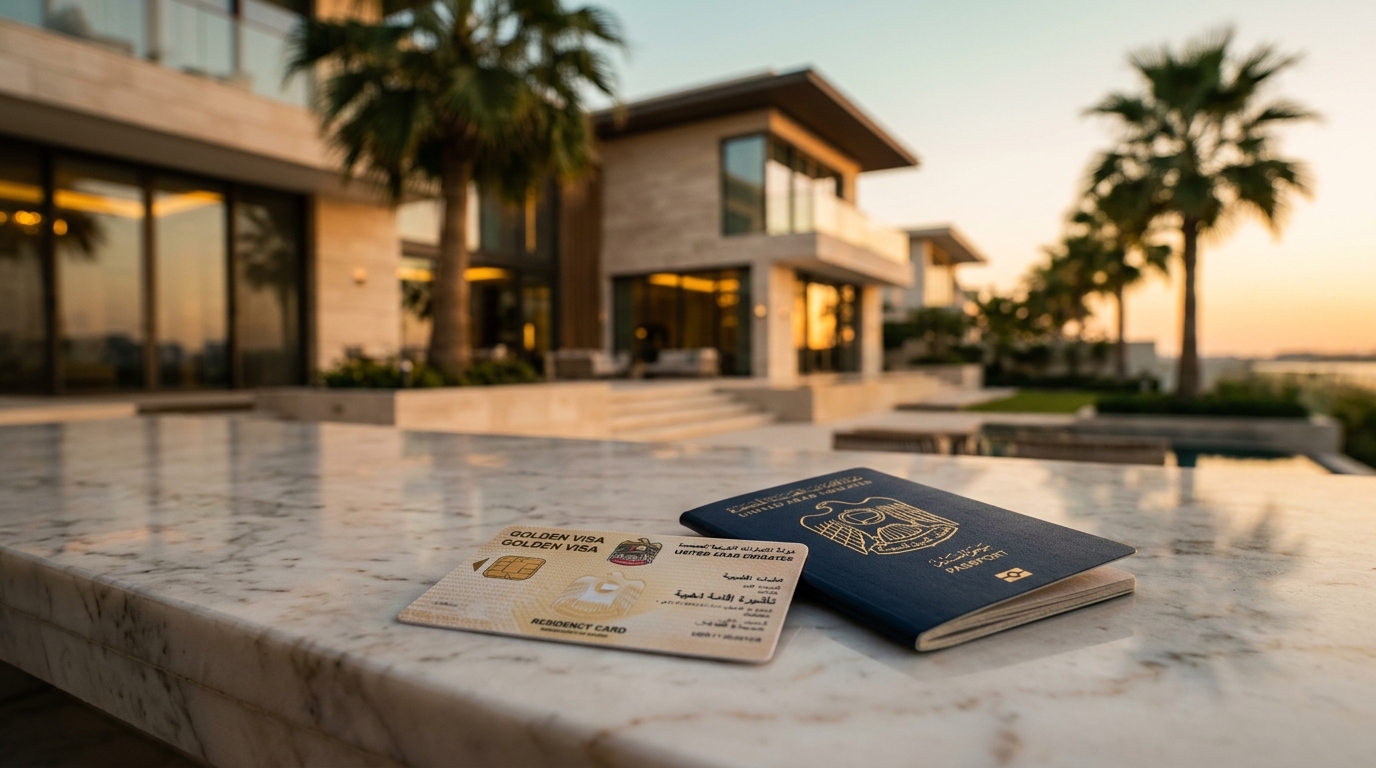
A Palm Jebel Ali address,and a decade of residency
For many buyers, the villa and the visa arrive together. Here's how a home on Palm Jebel Ali can put you over the property threshold for the UAE's 10-year Golden Visa — and what the route actually looks like.
- Visa term
- 10 years, renewable
- Property route
- AED 2 million+ in real estate
- PJA entry
- From AED 2.5M (apartments)
- Every collection
- Clears the threshold
- Off-plan
- Generally eligible on value
- Family
- Spouse & children typically included
- Ownership
- Freehold, all nationalities
- Status
- Confirm current rules on application
A lot of buyers who reach out about Palm Jebel Ali are not only asking about the island. They are asking about what the purchase unlocks — and for many, that is long-term residency in the UAE. The property-linked Golden Visa has quietly become one of the most compelling reasons to buy real estate in Dubai, because a single decision does two things at once: it secures a beachfront position on Nakheel's next flagship island, and it can anchor you and your family in the Emirates for a decade.
This guide walks through how that works — plainly, and without overselling it. We'll cover what the Golden Visa is, the property threshold that matters, how every Palm Jebel Ali collection clears it, how an off-plan purchase is treated, who the visa can extend to, and the practical steps. One caveat runs through all of it: visa policy is set and administered by the UAE authorities, not by any developer or agent, and the finer rules are updated periodically. Treat what follows as orientation, and confirm the current requirements against your own application before you rely on them.
What the Golden Visa actually is
The UAE Golden Visa is a long-term residence permit — issued for 10 years and renewable — designed to let qualifying residents live, work and study in the country without the traditional employer-sponsored visa that ties status to a job. It was introduced to attract and retain investors, entrepreneurs, specialists and, relevant here, property owners who commit meaningfully to the country.
Compared with a standard two- or three-year residence visa, the appeal is stability. You are not re-applying every couple of years, and your residency does not hinge on a single employment contract. For a family relocating to Dubai, or an investor who wants the option to spend real time here, that ten-year horizon changes the calculation entirely. It turns a property purchase into a foothold.
There are several routes to a Golden Visa — talent, entrepreneurship, exceptional skill, and more. The one this guide concerns is the real-estate route: qualifying by owning property in the UAE above a set value. That is the door a Palm Jebel Ali home opens.
The property threshold: AED 2 million
The widely-published qualifying figure for the property-linked Golden Visa is AED 2 million in UAE real estate. Own property at or above that value and you may apply for the 10-year visa on the basis of the investment. This is a public, well-established threshold — but the precise conditions attached to it (how equity is assessed, documentation, whether financed portions count) are the sort of detail that is periodically refined, so treat the number as the headline and confirm the current mechanics when you apply.
The important structural point for buyers: the threshold is comfortably within reach of a Palm Jebel Ali purchase. Where some Dubai communities have entry prices that sit below the line — leaving buyers to top up or combine properties — Palm Jebel Ali does not present that problem. Every home on the island is priced above the mark, most of them well above it.
How every collection clears the line
Whichever collection you choose, the purchase price sits above the AED 2 million property threshold — the entry point clears it, and everything above only clears it more comfortably. Eligibility is still assessed on your individual application.
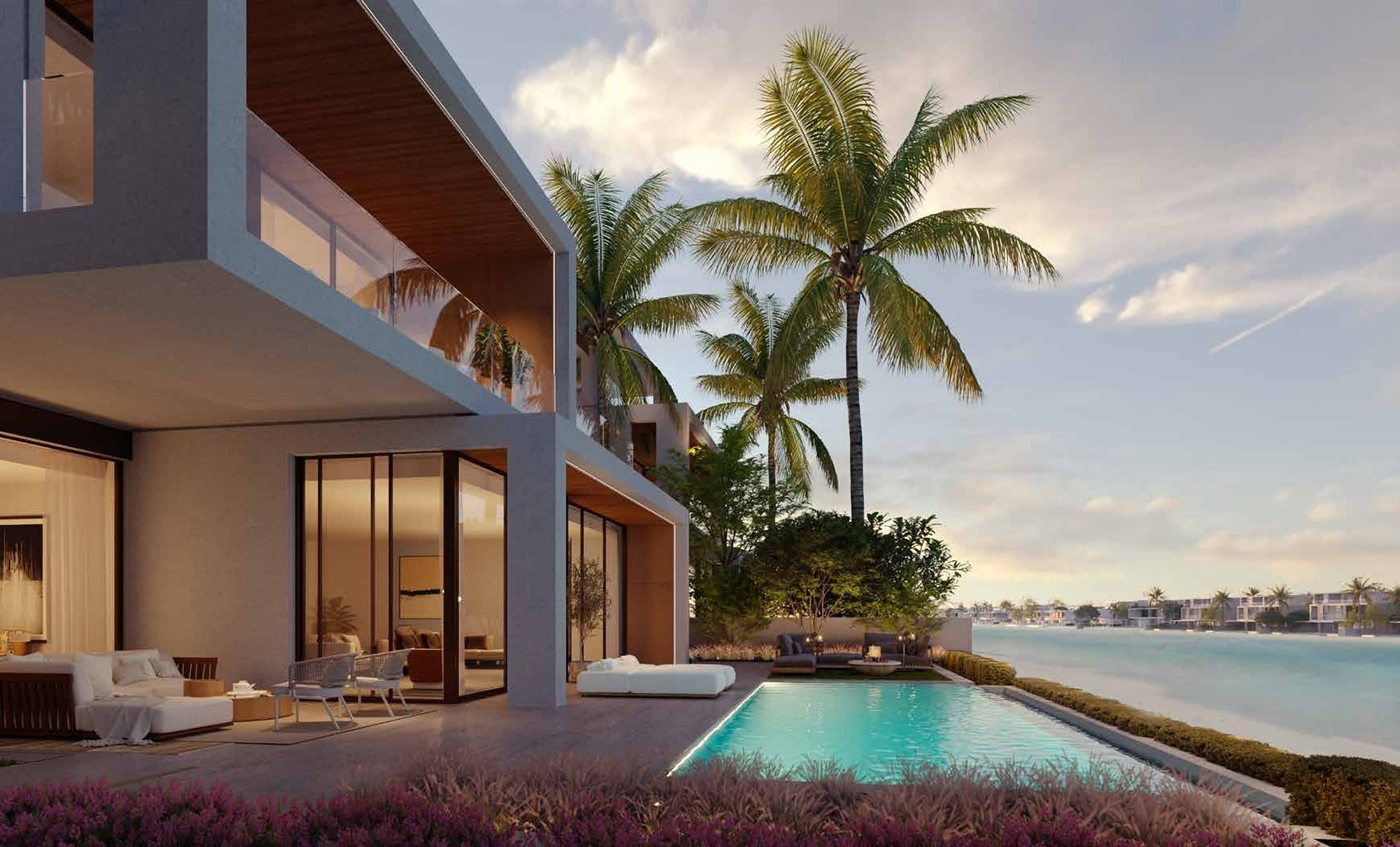
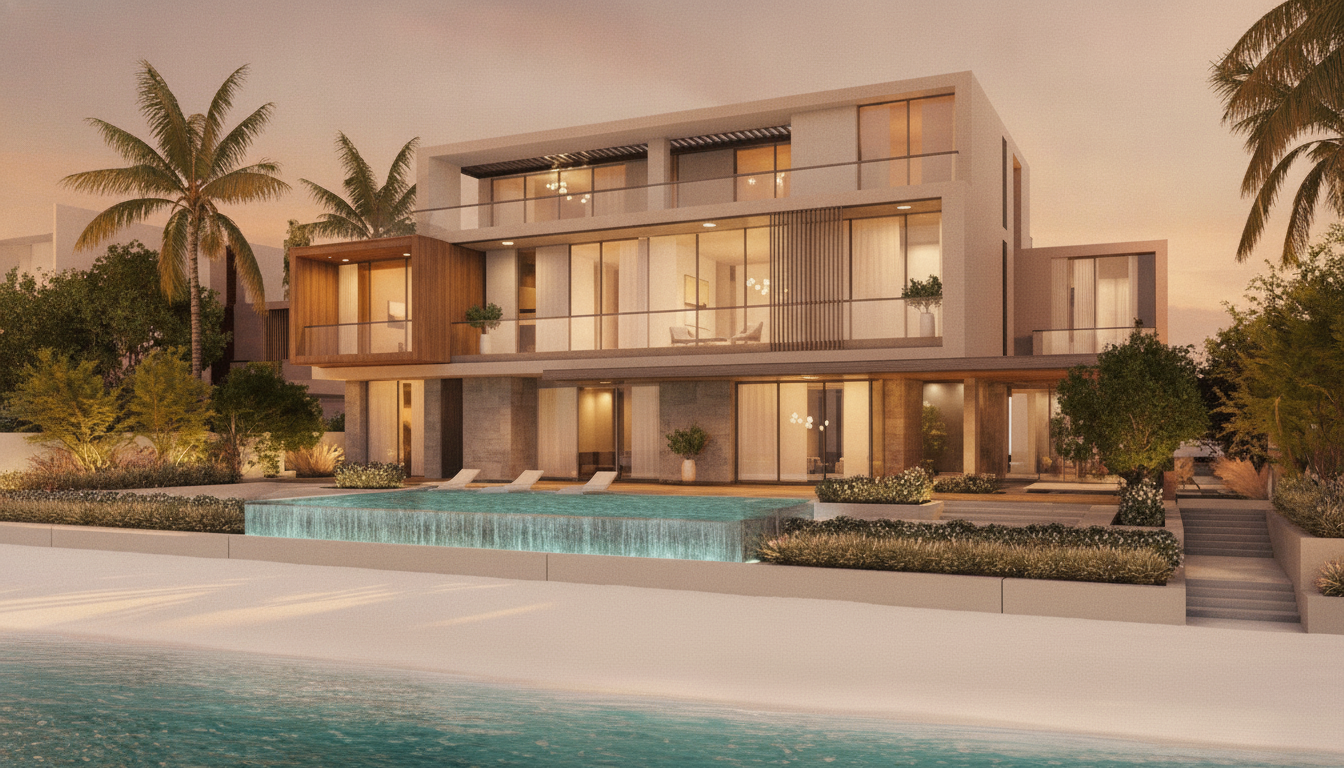
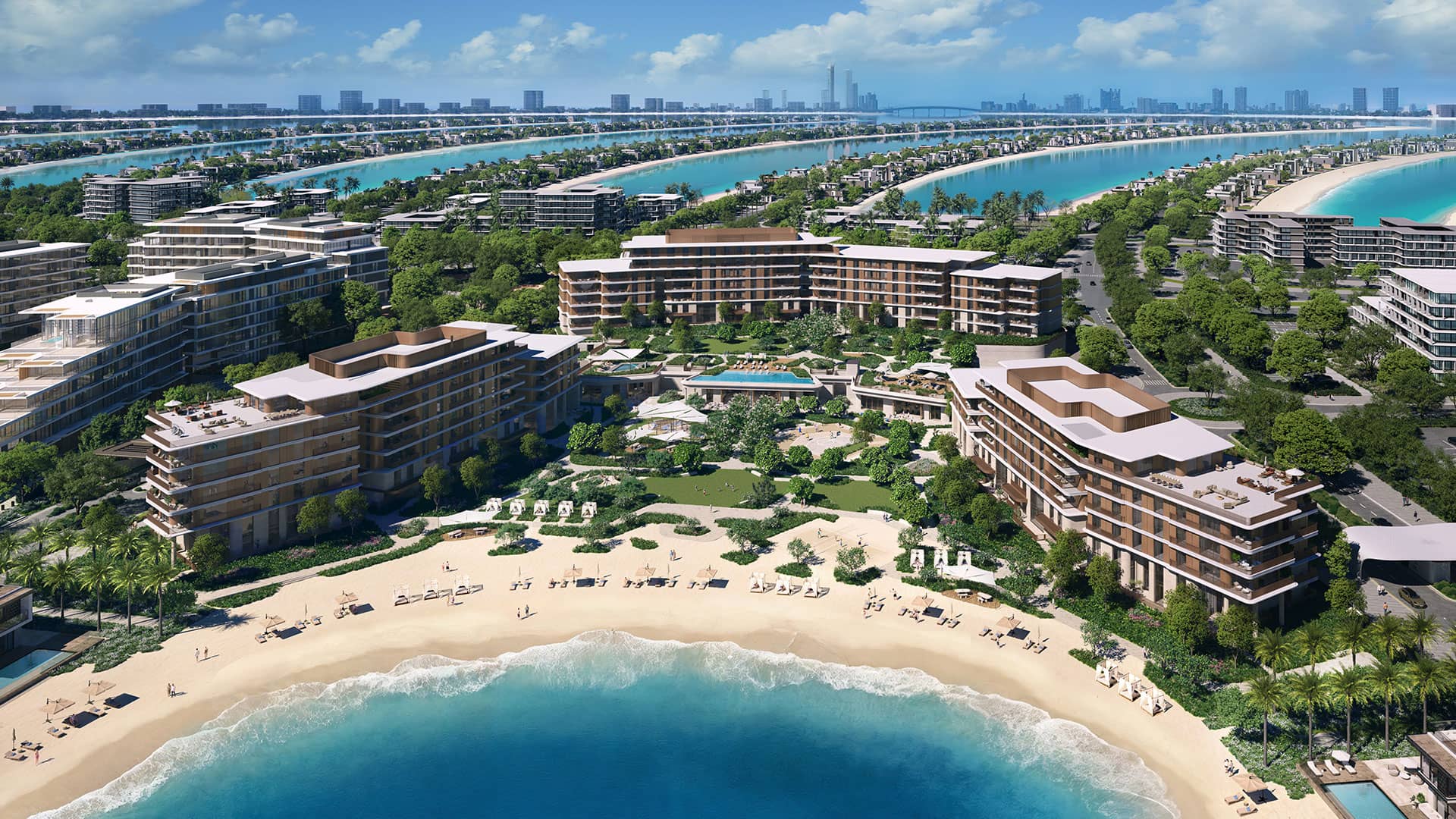
Read the numbers against the threshold and the pattern is obvious. Palm Central Private Residences — the island's most accessible entry — start from around AED 2.5 million, already above the AED 2 million line. Beach Collection villas open from roughly AED 18.5 million, and Coral Collection signature mansions from about AED 30 million, many multiples clear of it. There is no collection on the island where the buyer needs to worry about falling short of the property value that the visa route is built around.
That is worth stating plainly because it removes a variable. On some purchases, buyers structure the deal specifically to reach the threshold. Here, the qualifying value is a by-product of simply buying on the island — the decision is which home, not whether it counts.
“On Palm Jebel Ali the threshold isn't a hurdle to clear — the cheapest home on the island already sits above it.”
How off-plan purchases qualify
Palm Jebel Ali is sold off-plan — you are buying against a master plan, with handover phased from 2027 onward, rather than collecting keys to a finished home. A fair question follows: does a property that isn't built yet count toward the Golden Visa?
The widely-understood public position is that off-plan property can qualify, because the route is assessed on the property's value and its registration with the Dubai Land Department (DLD) rather than on whether construction is complete. When you reserve a Palm Jebel Ali home, the purchase is registered with the DLD — typically evidenced by an Oqood (off-plan registration) certificate — and that registered value is what the property route looks to. In practice this is why so many buyers of Dubai off-plan pursue the visa alongside the purchase.
The mechanics here are exactly the kind of detail the authorities update from time to time — minimum paid amounts, documentation, and timing can all be refined — so this is the point to confirm the current rules rather than assume. The reassuring part is structural: the value is there, the DLD registration is there, and the off-plan route is a well-trodden one. Your agent and the relevant authority can confirm precisely where your specific purchase stands at the time you apply.
Who the visa can cover
Part of the appeal is that the Golden Visa is generally not just for the buyer. As a matter of widely-known public practice, a qualifying investor can typically sponsor immediate family onto the visa — a spouse and children — so that the whole household holds long-term residency together, rather than the applicant alone. There is usually provision for domestic staff to be sponsored as well.
The exact scope — ages, dependency conditions, documentation for each family member — is set by the authorities and is the sort of thing that gets adjusted, so the honest guidance is the same as everywhere else in this guide: the family route is real and well-established, but confirm the current specifics for your own household when you apply. For a family relocating to Dubai, this is often the single most valuable feature — one property, one application, and a decade of settled status for the people who matter.
The practical steps
Roughly, the path from purchase to visa runs like this. Timelines and exact requirements are set by the authorities and change periodically — treat this as the shape of the process, not a fixed checklist.
1. Reserve your Palm Jebel Ali home
Choose a collection and reserve. Because every home on the island is priced above the AED 2 million threshold, the purchase itself puts you in qualifying territory on value.
2. Register the purchase with the DLD
Your off-plan purchase is registered with the Dubai Land Department, typically evidenced by an Oqood certificate. This registered value is what the property route is assessed against.
3. Prepare your documentation
The application draws on your title/registration proof, passport, photographs and standard supporting papers. Requirements are updated from time to time, so confirm the current list before compiling.
4. Apply for the Golden Visa
The application is submitted to the relevant UAE authority. Eligibility is assessed on your individual case — value, registration and the current rules in force at the time you apply.
5. Add your family and complete medical/Emirates ID
Once approved, family members can generally be sponsored onto the visa, alongside the standard medical and Emirates ID steps that finalise residency.
Why buyers value it
A decade of stability
Ten renewable years of residency that don't depend on an employer or a job contract — status that stays yours.
The whole family
The visa can typically extend to a spouse and children, so one purchase settles the household, not just the buyer.
Live, work, study
Long-term residence lets you build a genuine base in the UAE — schooling, business, banking — on a stable footing.
One decision, two outcomes
The same commitment secures a beachfront position on the island and anchors your residency. The property is the qualifier.
A grounded expectation
The Golden Visa is a genuine, substantial benefit of buying on Palm Jebel Ali — but it is a benefit administered by the UAE, not a guarantee written into the sale. Our advice is to treat it the way a good adviser would: assume the property comfortably clears the value threshold (it does), assume the off-plan and family routes are well-established (they are), and then verify the live rules against your specific circumstances before you rely on any of it. That is not caution for its own sake; it is simply how visa policy works, and the details do move.
Handled that way, the visa becomes what it should be — a strong, practical reason the numbers on Palm Jebel Ali stack up beyond the real estate alone. If residency is part of why you're looking at the island, tell us, and we'll make sure the purchase is structured with that outcome clearly in view.
Frequently asked questions
Does buying on Palm Jebel Ali qualify me for the Golden Visa?
It can. Every collection on the island is priced above the widely-published AED 2 million property threshold for the UAE's 10-year Golden Visa, so the purchase puts you in qualifying territory on value. Eligibility is assessed on your individual application, and current rules should be confirmed at the time you apply.
How much property do I need to own to qualify?
The well-established public figure for the property route is AED 2 million in UAE real estate. Palm Jebel Ali's most accessible homes — Palm Central apartments from around AED 2.5 million — already sit above that, and villas and mansions clear it many times over. Confirm the precise current conditions on application.
Can an off-plan Palm Jebel Ali purchase count, even before it's built?
Generally yes. The property route is understood to be assessed on the property's value and its DLD registration (typically an Oqood certificate) rather than on completed construction, which is why off-plan buyers commonly pursue the visa alongside purchase. The specific requirements are periodically updated, so confirm the current rules for your purchase.
Does the visa cover my family?
As a matter of widely-known practice, a qualifying investor can typically sponsor a spouse and children onto the Golden Visa, often with provision for domestic staff. The exact conditions are set by the authorities and can change, so confirm the current specifics for your household when you apply.
How long is the Golden Visa valid?
The Golden Visa is a 10-year residence permit and is renewable. Unlike a standard employer-sponsored residence visa, it is not tied to a job, which is a large part of why long-term buyers value it.
Who actually decides if I get the visa?
The Golden Visa is issued and administered by the UAE authorities, not by the developer or agent. We can help structure the purchase with the visa in view and point you to the requirements, but eligibility is always assessed on your individual application under the rules in force at that time.
Buying for residency? Let's structure it that way
If the Golden Visa is part of why Palm Jebel Ali appeals, tell us — we'll walk you through which collection fits, how the off-plan registration works, and how to approach the visa with your circumstances in view.