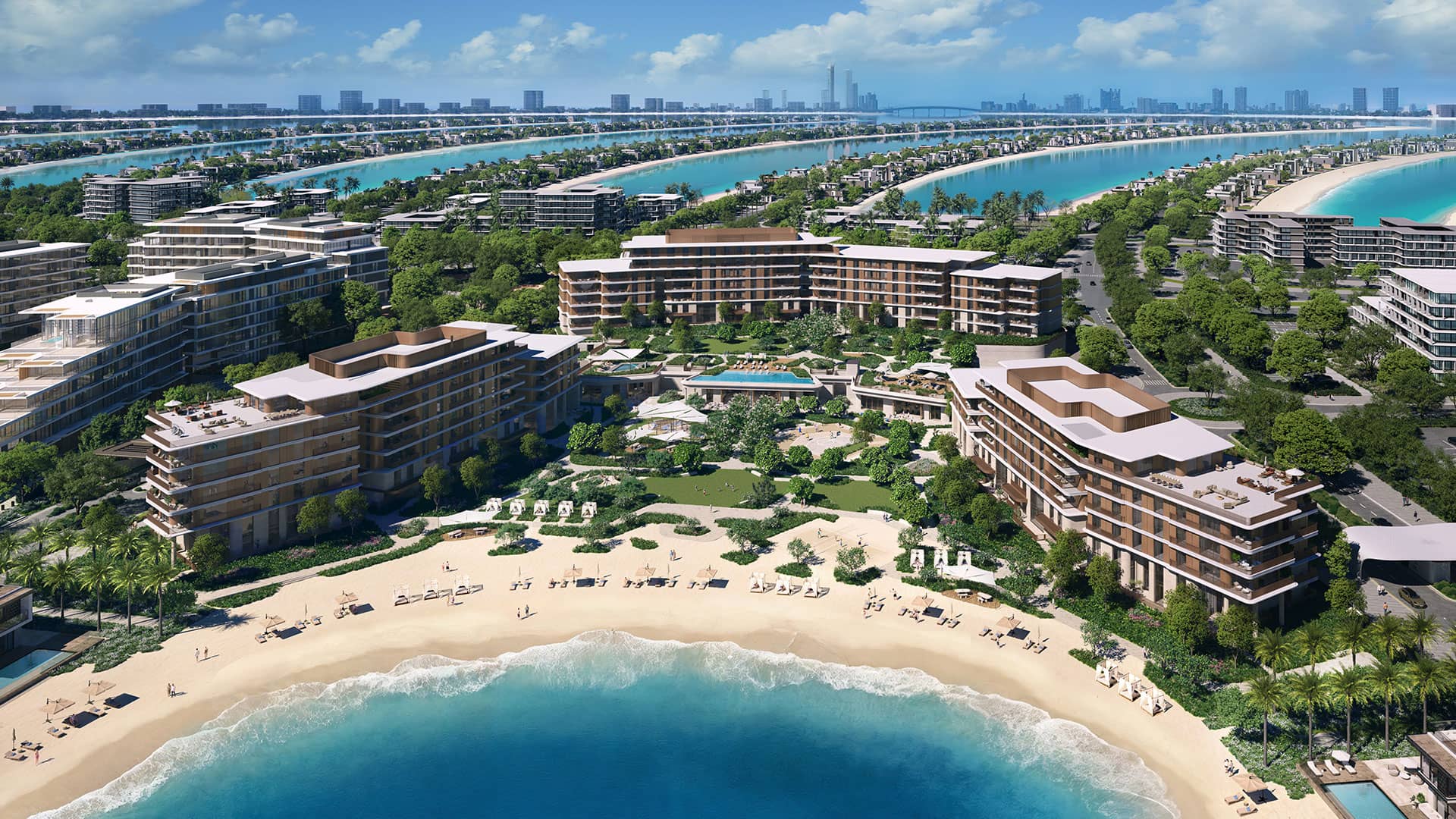
Hotels & resorts,a resort island by design
More than 80 hotels and resorts are planned across Palm Jebel Ali's outer edges. Here's what that hospitality layer brings to the doorstep of everyone who lives here — and why it matters to the island's long-term value.
- Hotels & resorts
- 80+ planned
- Positioning
- Outer fronds & island edges
- Mix
- Five-stars, eco-retreats, boutique, serviced
- For residents
- Dining, spas & beach clubs on the doorstep
- Delivery
- Phased, with later island phases
- Developer
- Nakheel
Most people first picture Palm Jebel Ali as somewhere to own a home — a frond villa, a beachfront apartment, a mansion on the outer curve. That is only half of what the island is being built to be. From the master plan up, it is conceived as a resort destination as much as a residential one: a place where the rhythm of a five-star holiday and the routine of everyday life share the same shoreline.
The clearest expression of that ambition is the hospitality layer. More than 80 hotels and resorts are planned across the island — an entire hospitality district woven along its edges rather than a single flagship property bolted on. That number reframes the whole proposition. You are not buying into a quiet suburb by the sea. You are buying into a resort island that happens to have addresses you can call your own.
The scale of the hospitality
Eighty-plus hotels and resorts is not a rounding of the amenity list — it is one of the defining facts about the island. For context, that is a concentration of hospitality more usually associated with an entire coastal city than a single development, and it is being planned into one master-planned island from the start.
The intent behind the number is variety, not repetition. The programme spans beachfront five-stars, eco-conscious retreats, serviced apartments for longer stays, and smaller boutique properties — a spread designed to draw different kinds of visitors and sustain the island through every season and price point. That breadth is what turns a collection of hotels into a genuine destination, and it is deliberately positioned along the outer fronds and island edges, where the water and the views are.
“Eighty-plus hotels is not an amenity footnote. It is the difference between a neighbourhood by the sea and a resort island you happen to live on.”
The kinds of stays planned
The hospitality mix is built for range — different visitors, different reasons to come, different price points, all along the island's most scenic edges.
Beachfront five-stars
Full-service resorts on the outer fronds — the flagship stays that anchor the island's hospitality and open their beaches, restaurants and spas to the wider community.
Eco-retreats
Lower-density, nature-led properties for guests who want the coastline and the calm — a quieter counterpoint to the marquee resorts.
Serviced apartments
Hotel-serviced residences built for longer stays — useful for visiting family, relocating buyers testing the island, or owners who want hotel amenities without a permanent second home.
Boutique stays
Smaller, design-led properties that give the island texture beyond the big flags — the independent restaurants, bars and rooms that make a destination feel lived-in.
What the hotel mix means if you live here
A resort island's real dividend is convenience. When 80-plus hotels and resorts share your coastline, their amenities effectively become an extension of your own. The restaurants that open to feed hotel guests are restaurants you can walk to. The spas, the beach clubs, the poolside bars, the weekend brunches — the everyday texture of a holiday becomes the everyday texture of home.
It changes how a place feels. Instead of driving off the island for dinner or a treatment, the destination comes to you: a critical mass of dining, wellness and waterfront leisure within minutes of the front door. For families, it means somewhere to take visiting guests without leaving; for couples, a standing supply of somewhere new to go on a Friday night; for anyone, the quiet luxury of having a beach club within reach rather than an hour's drive.
There is a practical dimension too. Concentrated hospitality supports the services that make daily life easier — well-kept public realm, evening activity, security that comes with footfall, and the kind of year-round vibrancy that a purely residential enclave rarely sustains.
What the hotels bring to the doorstep
Dining
Hotel and independent restaurants within the island — from casual beachfront to destination fine dining, without leaving home.
Wellness & spas
Resort spas and wellness facilities on your doorstep, open to residents as well as guests.
Beach clubs & leisure
Poolside days, beach clubs and waterfront leisure as part of everyday life rather than a day trip.
The investment angle
The hospitality layer is not just a lifestyle story — it is central to how the island's value matures. Hotels are what turn a residential address into a destination, and destinations command a premium. As resorts open, beach clubs fill and the island builds a reputation people travel for, the whole address appreciates with it. Residents buy at the start of that curve; hotels help drive it upward.
This ties directly to launch-phase timing. Today's pricing is set before most of the hospitality is operational — before the flagship resorts have opened their doors and before the island has earned its name as a place to visit as well as live. Historically, as amenities of this scale come online, the addresses around them re-rate. Buying now is, in part, buying ahead of the hospitality curve.
It also underwrites the rental and holiday-let case. A resort island with 80-plus hotels generates its own visitor economy — demand for short stays, serviced apartments and second homes near the action. That is a very different backdrop for an owner than a quiet residential island with nowhere for a visitor to stay.
How and when the hotels arrive
The hospitality is delivered in phases, and honesty matters here: the hotels are not day-one amenities. They come with the island's later phases, as the outer fronds and edges where most resorts sit are built out. The residential collections lead; the resort layer follows and deepens over the years that follow.
That phasing is exactly why the timing conversation is worth having. The island you move into first will not be the fully realised resort destination — that picture fills in over a longer horizon as property after property opens. For a buyer with patience, that gap between today's launch pricing and tomorrow's completed resort island is precisely where the opportunity sits. For a buyer who needs the full amenity picture on hand-over day, it is a reason to weigh the timeline carefully before committing.
Frequently asked questions
How many hotels are planned at Palm Jebel Ali?
More than 80 hotels and resorts are planned across the island, positioned along its outer fronds and edges. The mix spans beachfront five-stars, eco-retreats, serviced apartments and boutique stays — a full hospitality district rather than a single resort.
Can residents use the hotel amenities?
A resort island is designed so that its hospitality becomes part of everyday life — the restaurants, spas, beach clubs and waterfront leisure that serve hotel guests are within reach of residents too. Specific access arrangements vary by property, but the master plan's intent is a shared, destination-grade amenity layer on your doorstep.
Are the hotels open yet?
No. The hospitality is delivered in phases and arrives with the island's later stages, as the outer fronds and edges where most resorts sit are built out. The residential collections lead; the resort layer follows over the years after.
Why do the hotels matter for investment?
Hotels turn a residential address into a destination, and destinations command a premium. As resorts, beach clubs and dining come online, the whole island's reputation and value mature — and buyers who enter at launch-phase pricing are positioned ahead of that curve. A resort island also generates its own visitor economy, supporting short-stay and holiday-let demand.
What kinds of hotels will there be?
The planned mix is deliberately varied: beachfront five-star resorts, eco-conscious retreats, hotel-serviced apartments for longer stays, and smaller boutique properties. That range is what sustains the island as a year-round destination across different visitors and price points.
Picture the island as it's meant to live
From beach clubs to eco-retreats, the hospitality layer is what makes Palm Jebel Ali a resort island. Ask us how the phasing lines up with the homes launching now.