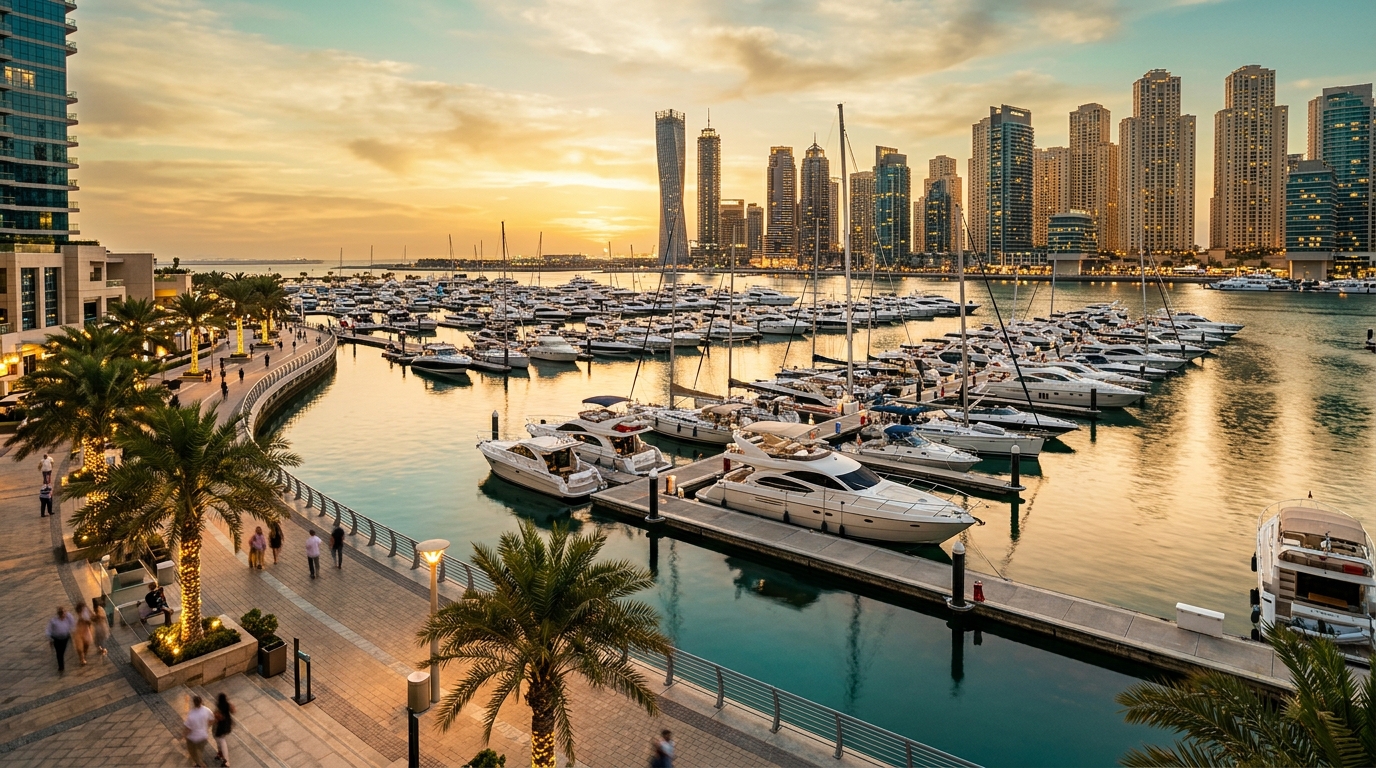
Marinas & yachting,an island built for the water
Palm Jebel Ali was drawn around the sea, not set back from it. Here's how the marinas, the berthing and the waterfront work — and what a life lived off your own dock actually feels like.
- Developer
- Nakheel
- Coastline
- ~110km of new shoreline
- Marinas
- Full-service, built into the crescent
- Berthing
- Designed for direct boat access
- Waterfront
- Dining & retail wrapped around the water
- Scale
- 16 fronds · ~2× Palm Jumeirah
- The Gulf
- Steps from the door
- Dubai Marina / JBR
- ~25 min by road
Most waterfront homes are built beside the sea. Palm Jebel Ali was built into it. The island's whole geometry — sixteen fronds reaching out from a protective crescent, roughly 110 kilometres of new coastline folded into a shape twice the footprint of Palm Jumeirah — exists to put water on more sides of more homes than a natural shoreline ever could. That is not a view decision. It is an access decision.
For anyone who owns a boat, or has always meant to, that distinction is the whole point. On a conventional beachfront address the water is scenery: something you look at, drive to a marina for, and visit on a booking. Here the sea is infrastructure — planned into the layout so that stepping onto the water can be as ordinary as stepping into the car. This guide is about that difference, and what it means to live with the Gulf genuinely on your doorstep.
Marinas & berthing on the crescent
The crescent is the island's outer arm — the long, curving breakwater that shelters everything inside it. It is where the full-service marinas are built. That word 'full-service' matters: a marina is not just a row of moorings. It is fuel, water and power at the berth, the people and workshops who keep boats running, and the calm, protected water that makes coming and going effortless in almost any conditions. Building this into the crescent, rather than bolting it on afterwards, means the marina life is native to the island rather than an amenity you queue for.
The berthing is the part homeowners feel most directly. Palm Jebel Ali is designed for boat access, so the marinas aren't a distant facility on the far side of the development — they are woven through the crescent where the waterfront homes and residences sit. The ambition is a short, uncomplicated line between where you sleep and where your boat waits: less a commute to the water, more a threshold you cross.
What 'built for the water' means
The marina thinking shows up in a handful of concrete ways across the island.
Full-service marinas
Marinas built into the sheltering crescent — not a single facility bolted on, but berthing woven through the waterfront where people actually live.
Designed for boat access
The island's layout assumes a boat. Fronds and crescent are shaped so that getting onto the water is a short, everyday move rather than an expedition.
The Gulf on your doorstep
With ~110km of new coastline and homes reaching into the sea on every frond, open water is steps away — the sea as your own front garden, not a destination.
Waterfront dining & retail
Restaurants, cafés and retail wrap around the marinas, so the harbour edge is a place to spend an evening, not just a place to keep a boat.
“On most beachfronts the sea is scenery. Here it is infrastructure — planned in, so stepping onto the water is as ordinary as stepping into the car.”
The yachting lifestyle
A boat kept minutes from your door changes what a weekend is. A morning on the water stops being a plan made a week ahead and becomes a decision made over coffee: out for a few hours, back for lunch, no marina booking, no drive across the city. The Gulf's warm, sheltered waters reward exactly this kind of spontaneity — a swim off the back of the boat, a slow cruise along the fronds, an anchorage for the afternoon and home before dark.
The wider coast opens up too. From Palm Jebel Ali the rest of Dubai's shoreline is a cruise rather than a drive — Dubai Marina and JBR sit around 25 minutes away by road, and the sea route turns the same journey into part of the day out. Sunset runs, dinner reached by tender, a longer passage down the coast at the weekend: the island is positioned so the water is a genuine way to move, not only a place to look at.
None of this asks you to be a lifelong sailor. The appeal of a full-service marina is precisely that the difficult parts — maintenance, fuelling, the logistics of ownership — are handled close to home, so what's left is the part you actually wanted: time on the water, easily reached and easily enjoyed.
Waterfront marina districts
A marina is only half a place if it's only for boats. Palm Jebel Ali treats its marinas as social ground: dining and retail are wrapped around the water so the harbour edge becomes somewhere you go whether or not you own a berth. Think of the marina as the island's promenade — the stretch where a morning coffee, an evening table and the passing traffic of boats all share the same waterfront.
This is the difference between a marina you use and a marina you live around. Restaurants that open onto the moorings, cafés where the view is masts and open Gulf, retail that draws people down to the water in the cool of the evening — the marina districts are designed to give the island its natural gathering points. For residents that means the everyday centre of gravity is the waterfront itself, not an inland high street with the sea kept out of sight behind it.
What this means for waterfront homeowners
For a homeowner, the marinas are what turn a sea view into a way of life. A frond home here isn't just close to the water — it is positioned so the water is usable: berthing built into the crescent nearby, the Gulf a few steps from the door, and the marina's dining and retail as your local surroundings. The address does the work that, elsewhere, a membership and a drive across town would.
It also shapes the character of the island long term. Homes organised around marinas and open water attract people who want to live with the sea rather than beside it, and a full-service, boat-access waterfront is a hard thing to replicate — the crescent, the sheltered berthing and the frond geometry are fixed once built. For anyone weighing a waterfront home here, the marinas aren't a bonus line on the brochure. They are the reason the island is shaped the way it is, and the clearest expression of what it was designed to be: a place built, from the water outward, for a life lived on it.
Frequently asked questions
Does Palm Jebel Ali have its own marinas?
Yes. Full-service marinas are built into the island's sheltering crescent, with berthing woven through the waterfront where residences sit. The island is designed for direct boat access rather than treating the marina as a distant, separate facility.
Can I keep a boat at my home on Palm Jebel Ali?
The island is planned around boat access, with berthing built into the crescent close to the waterfront homes. The intention is a short, everyday line between where you live and where your boat waits. Specific berth arrangements are confirmed by the developer for each residence.
What is there to do around the marinas besides boating?
The marinas are social districts, not just moorings. Waterfront dining and retail are wrapped around the water, so the harbour edge works as a promenade — somewhere to eat, meet and spend an evening whether or not you own a berth.
How easy is it to reach the open sea and the rest of Dubai's coast?
With around 110km of new coastline and homes reaching into the water on every frond, the open Gulf is steps away. By sea the wider Dubai shoreline is a cruise rather than a drive; by road, Dubai Marina and JBR are about 25 minutes north.
Do I need to be an experienced sailor to enjoy the marina lifestyle?
No. The point of a full-service marina is that ownership's harder parts — fuelling, maintenance, logistics — are handled close to home. What's left is time on the water, easily reached, whether you're a seasoned owner or new to boating.
Want to live with the water on your doorstep?
Tell us how you'd use the marina — weekends on the Gulf, a berth near the door, the waterfront as your local — and we'll help you find the frond and home that fit.