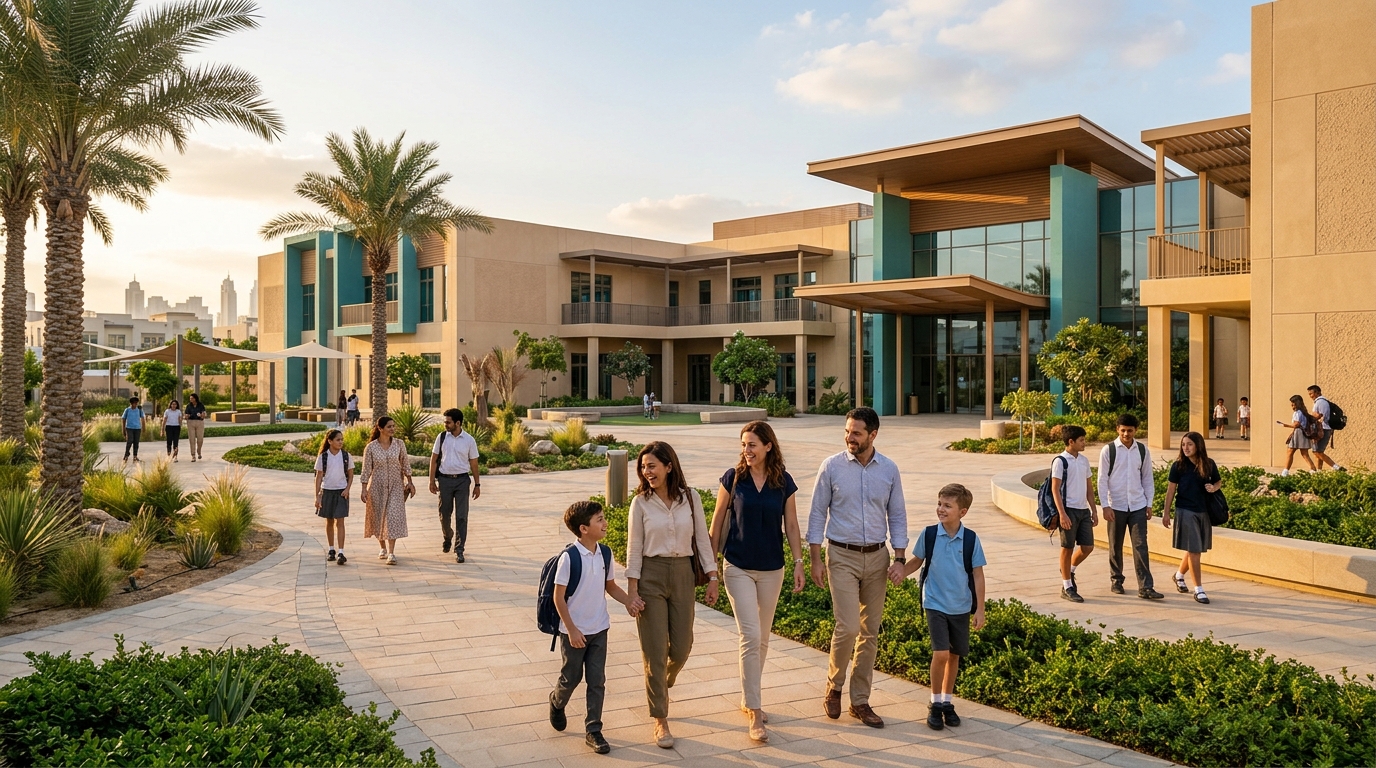
Everyday life on the island,built for families, not just holidays
Schools, clinics, mosques and neighbourhood retail are planned in from the start — with parks, shaded playgrounds and walkable, car-light streets threaded between the fronds. Here's what family life is designed to feel like.
- Schools
- Planned in from day one
- Healthcare
- Community clinics on-island
- Places of worship
- Mosques within the plan
- Retail
- Neighbourhood shops & essentials
- Green space
- Parks & shaded playgrounds
- Getting around
- Island-wide cycling & walking routes
- Wellness
- Fitness & wellbeing woven in
- Design
- Car-light, walkable neighbourhoods
It is easy to picture Palm Jebel Ali as a postcard — turquoise water, private beaches, a skyline of resort hotels. All of that is true. But the more important question for a family isn't whether the island photographs well. It's whether it works on a Tuesday morning: the school run, a paediatrician appointment, a bag of groceries, somewhere for the children to burn off energy before dinner.
This guide is about that ordinary side of island life — the part that decides whether a home becomes a holiday address or a place you actually raise a family. The short version: the everyday essentials aren't an afterthought bolted on later. Schools, clinics, mosques and community retail are written into the master plan from day one, and the outdoors — parks, water features and shaded playgrounds — is threaded between the fronds rather than squeezed in around them.
Schools & education, planned in from the start
A family island only earns the name if children can go to school without leaving it. That principle is built into how Palm Jebel Ali has been planned: education is one of the community foundations reserved within the master plan, not a gap the market is left to fill after the villas are sold.
We'll be honest about what that means today. Specific schools, operators and curricula are confirmed closer to handover, the way they typically are for a community of this scale — the land and the intent are set now, and the names follow as the island's population takes shape. What matters at this stage is that schooling is designed into the island's bones, sitting alongside homes and green space rather than a long drive away on the mainland.
For families weighing the move, that's the honest framing: the commitment to on-island education is real and part of the plan; the detail arrives as the community matures. It's a question worth asking us directly, and one we'll always answer with what's confirmed rather than what sounds good.
“A family island isn't proven by its beaches. It's proven on a Tuesday morning — the school run, the clinic, the walk home before dinner.”
Healthcare & clinics, close to home
With young children, proximity to care is not a luxury — it's the difference between a manageable day and a stressful one. Palm Jebel Ali plans community clinics and healthcare into the island itself, so a routine check-up or a feverish evening doesn't begin with a bridge and a highway.
The intent is everyday medicine within reach: the kind of neighbourhood healthcare that handles the ordinary moments of family life close to your front door, with Dubai's wider hospital network a straightforward drive away for anything more specialised. It's healthcare designed to fit the rhythm of island living rather than interrupt it.
The everyday essentials, on the island
The amenities that turn a beautiful address into a workable home for a family — all planned as part of the community, not left to chance.
Schools & education
Education reserved within the master plan from day one, so children can learn on the island. Operators and curricula confirmed closer to handover.
Community clinics
Everyday healthcare planned into the island, keeping routine appointments and after-hours worries close to home.
Mosques & places of worship
Mosques are part of the community fabric from the start, woven into the neighbourhoods rather than added later.
Neighbourhood retail
Community shops and everyday essentials planned in — the groceries, pharmacy runs and small errands within a short walk.
Parks & water features
Green space and water features threaded between the fronds, so nature is part of the daily view, not a weekend outing.
Wellness & fitness
Fitness and wellbeing woven through the island, from open-air routes to spaces designed to keep the whole family active.
Parks, playgrounds & the outdoors
Children remember the outside of a home more than the inside — the tree they climbed, the path they learned to cycle, the playground down the road. Palm Jebel Ali is planned with that in mind. Parks, water features and shaded playgrounds are threaded between the fronds, so green, open space is part of the everyday texture of the island rather than a single central park you have to drive to.
The shade matters as much as the grass. In Dubai's climate, a playground in full sun goes unused for half the year; shaded play areas are designed to keep the outdoors usable for children through more of the day and more of the calendar. The result is an island where 'go outside and play' is a realistic sentence, not a seasonal one.
Beyond the playgrounds, the whole island is built to be moved through on foot and by bike. Cycling and pedestrian routes run island-wide, connecting neighbourhoods to parks, beaches and community spaces — the kind of network that lets an older child cycle to a friend's home and a family take an evening walk without ever needing the car.
Safety, and a car-light island
The walkable, cycle-friendly design isn't only about leisure — it's about how safe the island feels to live on. When streets are planned around people rather than traffic, children gain room the mainland rarely offers: paths they can use independently, playgrounds within walking distance, neighbourhoods where the car is an option rather than a necessity.
That car-light layout, combined with the island's defined access points and self-contained community, gives Palm Jebel Ali the quiet, contained feel parents look for. It's the reassurance of knowing your children can walk to a park or cycle to a friend's without crossing a busy road — the everyday freedom that makes an island genuinely suited to raising a family.
Why families choose island living
Plenty of Dubai communities offer a good school and a nice park. What island living adds is a sense of completeness and boundary — a place where the beach, the playground, the clinic and the school sit within one connected community, and where the daily radius of a child's life is small, green and largely walkable.
It suits families who want their children to grow up with water, open space and the outdoors as the ordinary backdrop to childhood, not a holiday treat — and who value a neighbourhood where the essentials of family life are planned in rather than hoped for. It suits less well anyone who needs every amenity operational on the day they move in; this is a community that matures in phases, and some of the family infrastructure arrives as the island fills.
That's the honest trade: patience through the build in exchange for a family home on one of the most ambitious islands Dubai has ever planned. If that balance sounds like yours, it's exactly the conversation worth having with us before you decide.
Frequently asked questions
Are there schools at Palm Jebel Ali?
Schools are planned into the island from day one — education is one of the community foundations reserved within the master plan, so children can learn on the island rather than commuting to the mainland. Specific schools, operators and curricula are confirmed closer to handover, as is typical for a community of this scale. The commitment is set now; the detail follows as the island's population grows.
What healthcare is available on the island?
Community clinics and everyday healthcare are planned into Palm Jebel Ali, keeping routine appointments and after-hours care close to home. Dubai's wider hospital network remains a straightforward drive away for anything more specialised.
Is Palm Jebel Ali a good place to raise a family?
It's designed to be. Schools, clinics, mosques and neighbourhood retail are planned in from the start, parks and shaded playgrounds are threaded between the fronds, and the island is built to be walked and cycled rather than driven. The trade-off is that it's a phased community — some family amenities arrive as the island matures.
Can children walk and cycle safely around the island?
Yes — that's a core part of the design. Island-wide cycling and pedestrian routes connect neighbourhoods to parks, beaches and community spaces, and the car-light layout means children have paths and playgrounds within walking distance rather than across busy roads.
What green and outdoor spaces are there for children?
Parks, water features and shaded playgrounds are threaded between the fronds, so open green space is part of everyday island life rather than a single distant park. The shaded play areas are designed to stay usable through Dubai's warmer months, keeping the outdoors a realistic option for more of the year.
Planning a family move to the island?
Tell us what matters most — schooling, healthcare, the walk to the beach — and we'll give you a straight read on how Palm Jebel Ali fits, with what's confirmed today and what's still to come.