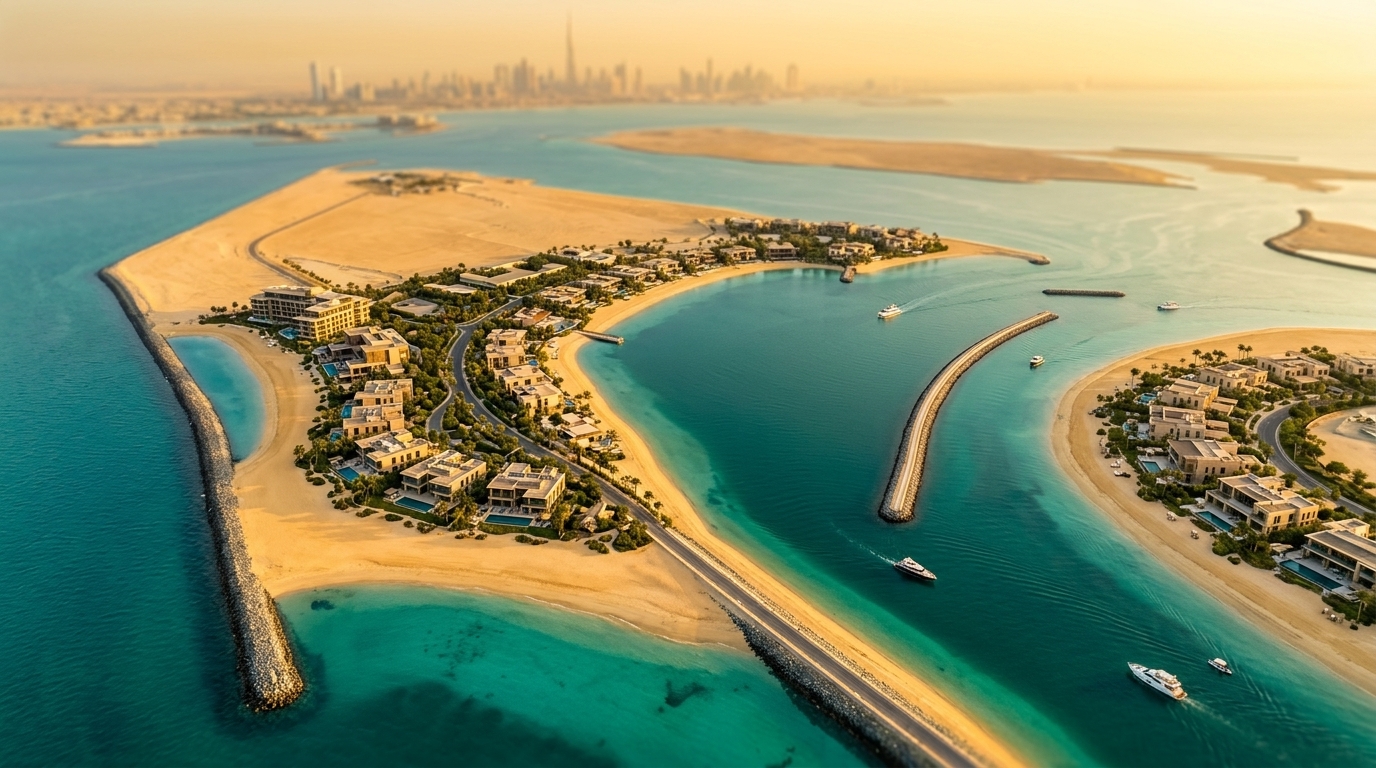
Palm Jebel Ali vsDubai Islands
Two Nakheel waterfronts at opposite ends of the coastline — one an iconic palm in the south, one a cluster of islands off Deira in the north. They are less rivals than different answers to different questions. Here's how to tell which one is yours.
- Both by
- Nakheel
- Palm Jebel Ali
- Southern coast, beside Jebel Ali
- Dubai Islands
- Northern coast, off Deira
- PJA form
- Single palm island · 16 fronds
- Dubai Islands form
- Cluster of islands, mixed-use
- PJA villas
- From AED 18.5M
- PJA apartments
- From AED 2.5M
- Character
- PJA prime resort · Islands urban-coastal
Nakheel is building on both ends of Dubai's coast at once. In the south, beside Jebel Ali, it is raising Palm Jebel Ali — a second, far larger palm-shaped island. In the north, off the old Deira waterfront, it is redeveloping the former Deira Islands into Dubai Islands, a cluster of islands with a more mixed, urban character. Same developer, same ambition to add coastline to the city, but two very different propositions.
Buyers often line these two up as competitors. In practice they rarely compete for the same person. One is a landmark, launch-stage, prime beachfront play; the other is a broader, more accessible coastal district closer to the historic centre of the city. This guide sets them side by side honestly — what we can state as fact for Palm Jebel Ali, and what is fair to say in general terms about Dubai Islands — so you can see which question you're actually asking.
The two at a glance
Where they sit, what they are, and the shape of each opportunity. Palm Jebel Ali figures are from our fact sheet; Dubai Islands is described in general, widely-known terms.
South coast · beside Jebel Ali
Palm Jebel Ali
A single, iconic palm-shaped island by Nakheel — 16 fronds, over 10.5 million sqm, roughly twice the footprint of Palm Jumeirah, with around 110km of new coastline. Freehold beachfront villas and resort apartments, sold off-plan at launch-phase pricing.
North coast · off Deira
Dubai Islands
Nakheel's redevelopment of the former Deira Islands, off Dubai's northern Deira shoreline — a cluster of islands rather than one form, planned as a mixed-use, urban-coastal district. Closer to the historic heart of the city and generally positioned as a more accessible entry point.
Location: opposite ends of the city
Geography is the cleanest line between the two. Palm Jebel Ali sits on Dubai's southern coastline, beside Jebel Ali, tied to the mainland by access straight onto Sheikh Zayed Road (E11). It anchors the southern growth corridor — minutes from Expo City and roughly 20 minutes from Al Maktoum International (DWC), the airport being expanded into one of the world's largest. Its story is about where Dubai is heading.
Dubai Islands sits at the other end, off the Deira coast in the north — the historic, established side of the city. Where Palm Jebel Ali is about the next decade's Dubai taking shape around it, Dubai Islands leans on proximity to the old centre, the creek, and the dense, lived-in northern districts. Neither location is 'better'; they answer different instincts — future-facing frontier versus established, central coastline.
Scale & character
Palm Jebel Ali is defined by a single, deliberate silhouette. It is one island in the shape of a palm — 16 fronds radiating from a spine, over 10.5 million sqm of reclaimed land, roughly twice the size of Palm Jumeirah, adding around 110km of coastline in one master-planned move. Its character is coherent and singular: a flagship resort island where the whole is designed to read as one landmark.
Dubai Islands takes a different form. Rather than one iconic shape it is a cluster of islands, planned as a broader mixed-use district — a blend of residential, hospitality, retail and leisure spread across several land parcels. That gives it a more varied, urban-coastal texture: less a single grand gesture, more a new piece of city grafted onto the northern waterfront. If Palm Jebel Ali is a statement, Dubai Islands is a neighbourhood.
Price tier & product — Palm Jebel Ali
On Palm Jebel Ali we can be specific. Three launched collections span apartments to ultra-prime mansions. (For Dubai Islands, product and pricing vary by release and developer partner — treat any figure you're quoted as release-specific and verify it directly.)
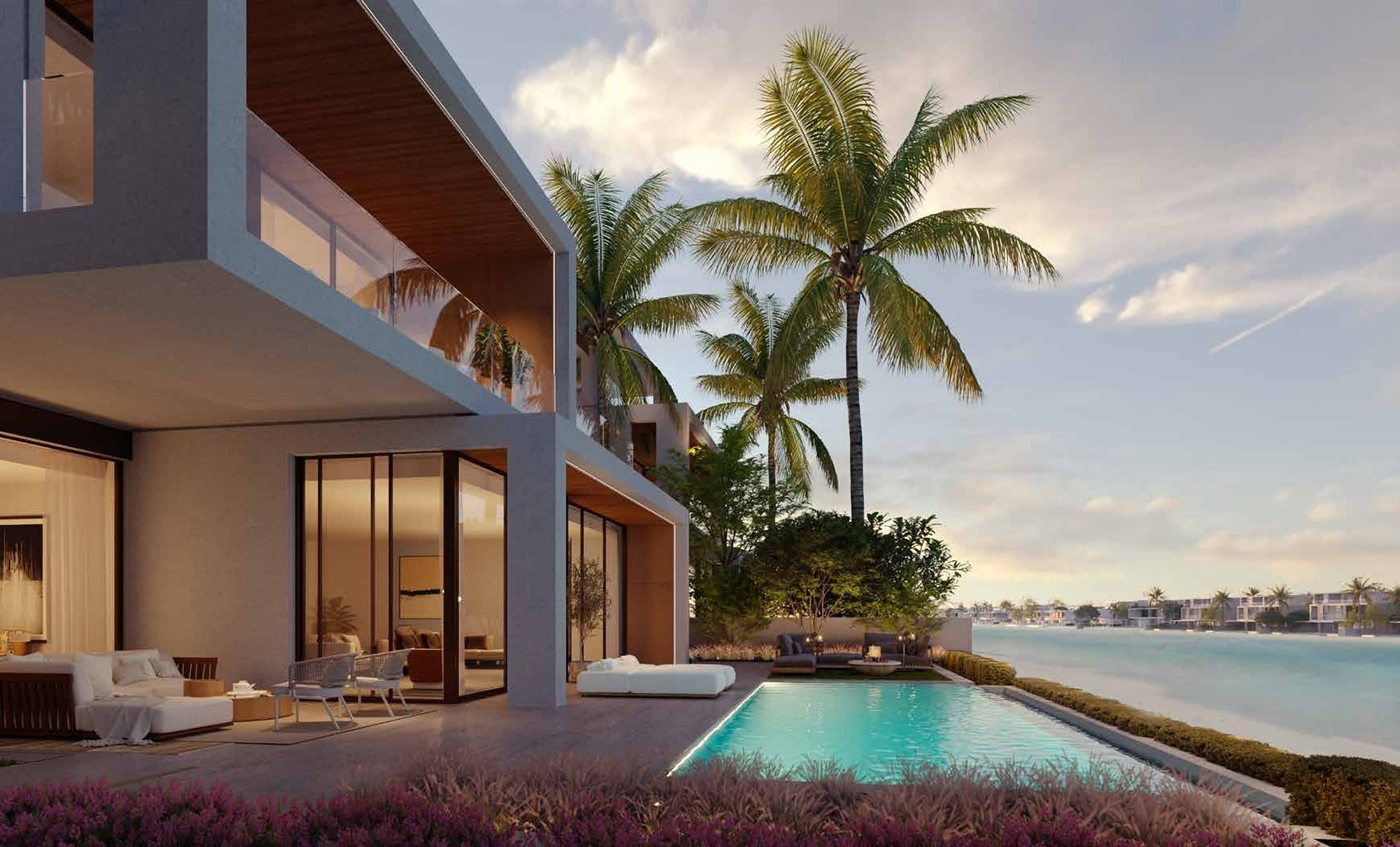
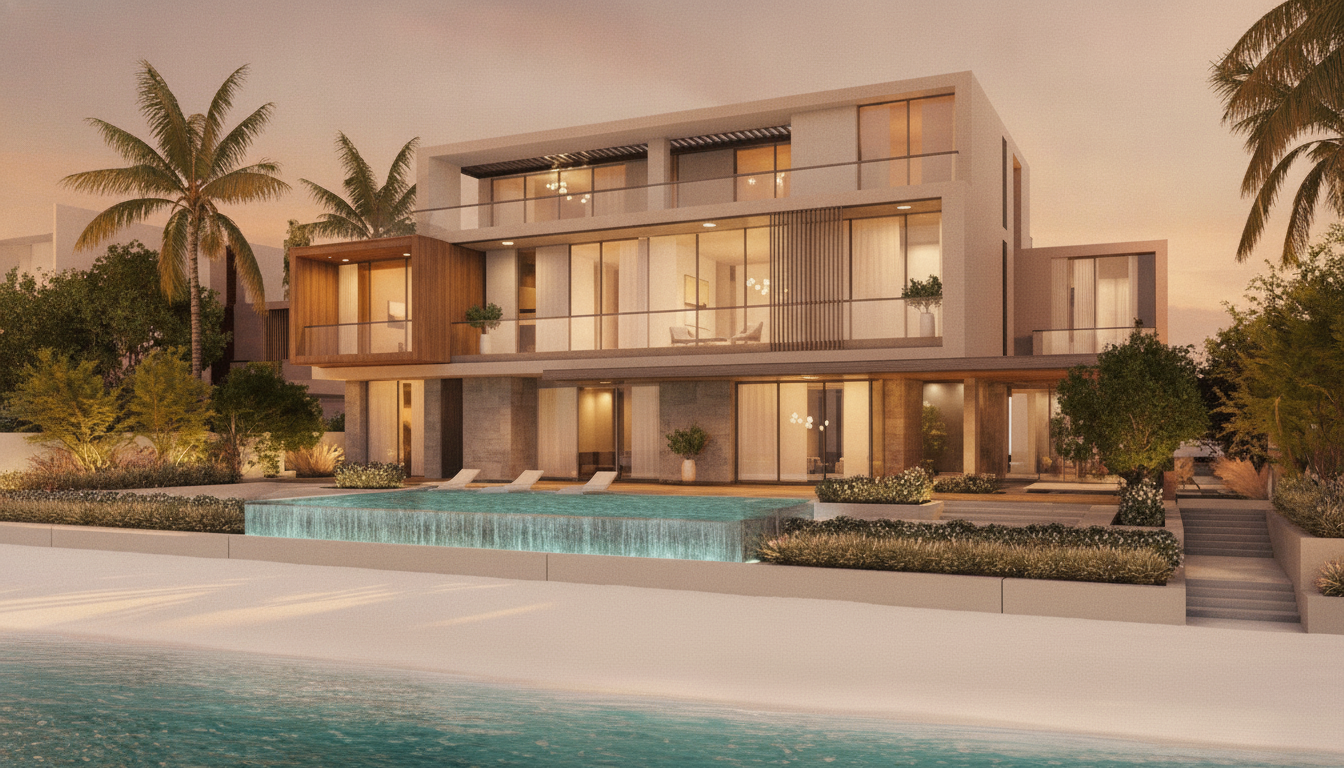
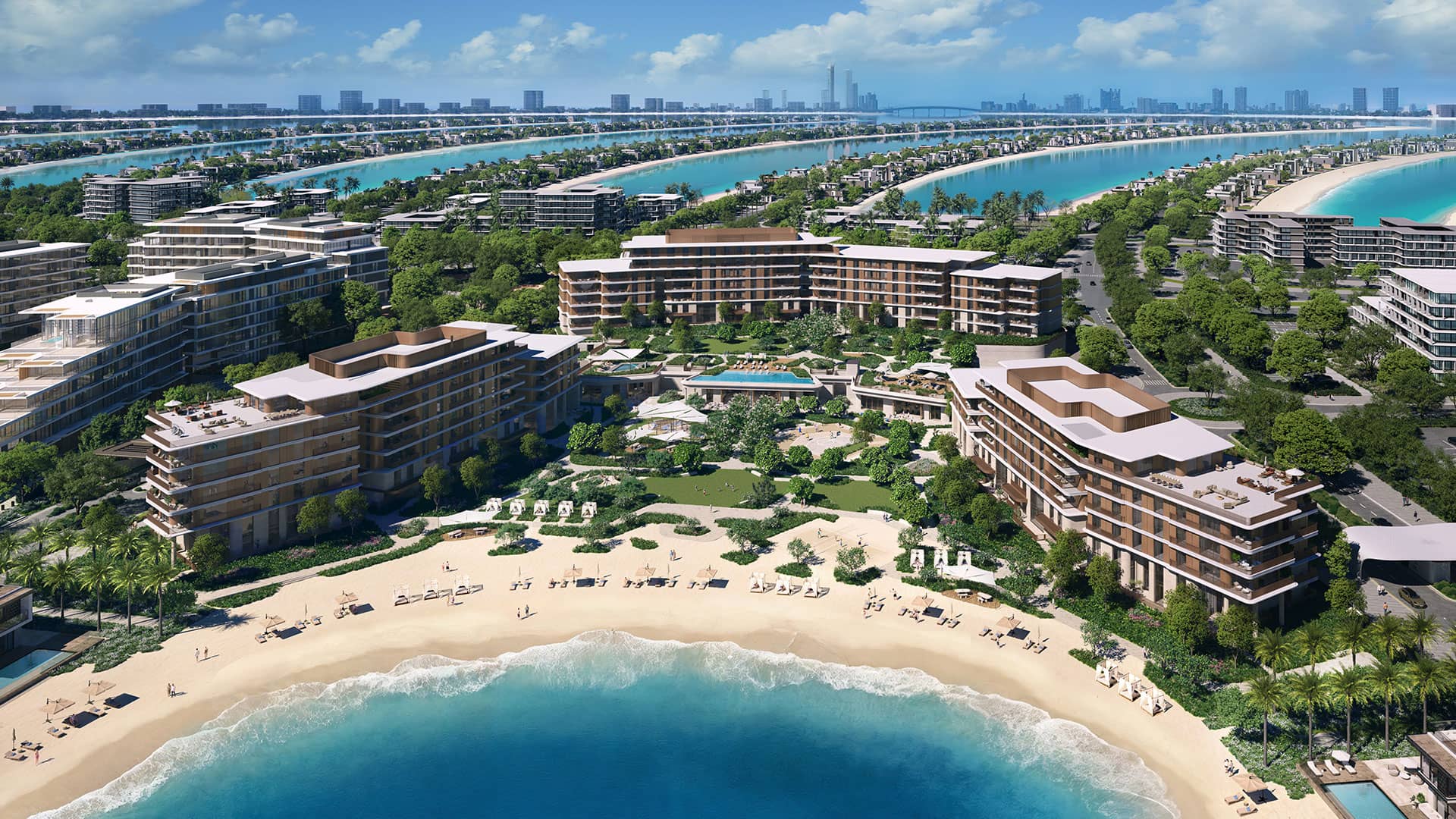
So the Palm Jebel Ali ladder is clear: Palm Central apartments from around AED 2.5 million, Beach Collection villas from about AED 18.5 million, and Coral Collection signature mansions from roughly AED 30 million — freehold, off-plan, on an 80/20 payment plan. It is, unmistakably, a prime beachfront product, and the villa tier in particular sits firmly in the luxury bracket.
Dubai Islands is generally positioned as the more accessible of the two — a wider mix of product across a mixed-use district rather than a single prime island. We deliberately won't quote prices for it here: they vary by parcel, release and partner, and pinning a number to 'Dubai Islands' as a whole would be misleading. The honest takeaway is directional — Palm Jebel Ali skews prime and landmark; Dubai Islands skews broader and more entry-friendly.
“One is a landmark you buy into early. The other is a coastal district you move into. The right choice is really a question about you, not about which project is 'better'.”
Who each one suits
Palm Jebel Ali suits…
Buyers who want an iconic, prime beachfront address and are comfortable committing early, off-plan, against a long build. End-users chasing a landmark home and investors positioning for launch-stage appreciation in the southern corridor. It rewards conviction and a long horizon.
Dubai Islands suits…
Buyers drawn to a more accessible entry point and a central, established side of the city, closer to old Dubai and the creek. Those who prefer a mixed-use, urban-coastal setting over a single prime island — and who value breadth of product over a landmark silhouette.
Lean Palm Jebel Ali if…
You believe in Dubai's southern trajectory (DWC, Expo City), want scarcity-driven beachfront, and can hold through construction for capital growth rather than immediate use or income.
Lean Dubai Islands if…
You want to be near the historic centre, prefer a wider range of price points, and like the idea of a coastal neighbourhood taking shape on the established northern shoreline.
Investment profile
For Palm Jebel Ali the thesis is scarcity and timing. It is freehold beachfront on a fixed number of frond plots, sold at launch-phase pricing before the island's hotels, marinas and beach clubs are operational — and it sits in the direction the city is actively building. The trade-off is off-plan risk: capital committed years ahead of handover, a thin secondary market during construction, and a very large island that matures over a long horizon. Returns hinge on the price you enter at.
Dubai Islands offers a different shape of opportunity. As a broader, more accessible mixed-use district on the established northern coast, it tends to appeal to buyers weighing entry price, rental potential and proximity to central Dubai rather than landmark scarcity. We keep this deliberately qualitative — the specifics depend on the individual release — but the contrast holds: Palm Jebel Ali is a concentrated, prime, long-horizon bet; Dubai Islands is a more diversified, more central coastal play. Different risk, different reward, different buyer.
Neither is objectively the smarter purchase. The honest answer depends on your timeline, your budget, and whether you're buying a landmark or a neighbourhood — which is exactly the conversation worth having before you reserve anything.
Frequently asked questions
Are Palm Jebel Ali and Dubai Islands both by Nakheel?
Yes. Both are Nakheel waterfront developments. Palm Jebel Ali is the palm-shaped island on Dubai's southern coast beside Jebel Ali; Dubai Islands is Nakheel's redevelopment of the former Deira Islands, off the northern Deira coastline.
What is the main difference between them?
Location and character. Palm Jebel Ali is a single iconic palm-shaped island in the south — 16 fronds, roughly twice the size of Palm Jumeirah — positioned as prime beachfront. Dubai Islands is a cluster of islands off Deira in the north, planned as a more mixed-use, urban-coastal district and generally more accessible.
Which one is more affordable?
Dubai Islands is generally positioned as the more accessible entry point, with a broader mix of product. Palm Jebel Ali is a prime beachfront product: apartments start from around AED 2.5 million and villas from about AED 18.5 million. Dubai Islands pricing varies by release, so verify any figure directly rather than treating it as a single number.
Which is the better investment?
Neither is objectively better — they suit different buyers. Palm Jebel Ali is a concentrated, prime, long-horizon off-plan bet on scarcity and Dubai's southern growth corridor. Dubai Islands is a more diversified, more central coastal play. The right choice depends on your budget, timeline and whether you want a landmark or a neighbourhood.
Where exactly is each one located?
Palm Jebel Ali sits on Dubai's southern coastline beside Jebel Ali, with direct access to Sheikh Zayed Road (E11), near Expo City and Al Maktoum International (DWC). Dubai Islands sits off the northern Deira shoreline, close to the historic centre of the city.
Which should I buy?
Lean Palm Jebel Ali if you want an iconic prime beachfront address, believe in Dubai's southern trajectory, and can hold through construction for capital growth. Lean Dubai Islands if you prefer a more accessible entry, a central location near old Dubai, and a mixed-use coastal neighbourhood. It's worth talking through your timeline before deciding.
Not sure which waterfront fits?
Tell us your budget and timeline and we'll give you a straight read on whether Palm Jebel Ali, Dubai Islands, or somewhere else altogether is the right call.