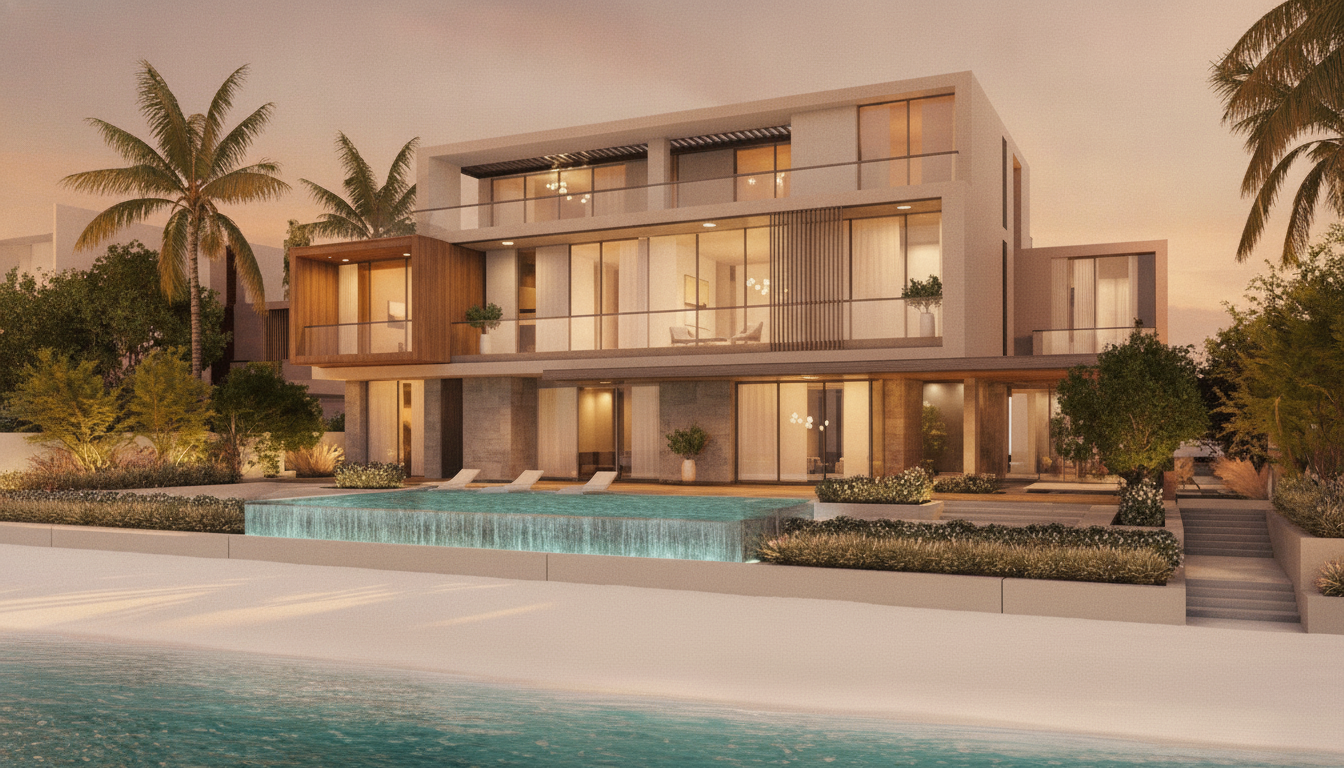
Palm Jebel Ali vs Jumeirah Bay Island,scale against scarcity
One island is a whole new coastline being built at once. The other is a jewel-box the size of a neighbourhood. Both are ultra-prime — but they answer completely different questions. Here's how they compare.
- Palm Jebel Ali
- Off-plan, launch phase
- Jumeirah Bay
- Completed, established
- PJA developer
- Nakheel
- JBI developer
- Meraas
- PJA scale
- 16 fronds · ~2× Palm Jumeirah
- JBI scale
- Micro-island, seahorse-shaped
- PJA entry
- From AED 2.5M
- Signature name
- Bulgari (JBI) vs SAOTA (PJA)
Put Palm Jebel Ali and Jumeirah Bay Island side by side and the first thing you notice is that they barely belong in the same conversation on size — yet buyers weigh them against each other all the time. Both are man-made islands off Dubai's coast, both trade at the very top of the market, and both promise something rarer than another tower on the mainland: a defined, gated stretch of the Gulf that only a fixed number of people will ever call home.
That's where the resemblance stops. Palm Jebel Ali, Nakheel's second and far larger palm, is scale on a civic level — sixteen fronds, over 110km of new shoreline, an island being reclaimed and built in one vast phased programme. Jumeirah Bay Island, Meraas's seahorse-shaped enclave off Jumeirah, is the opposite instinct: tiny, finished, and deliberately kept small. Choosing between them isn't really a choice about price. It's a choice about whether you're buying into scale or into scarcity.
Scale versus scarcity
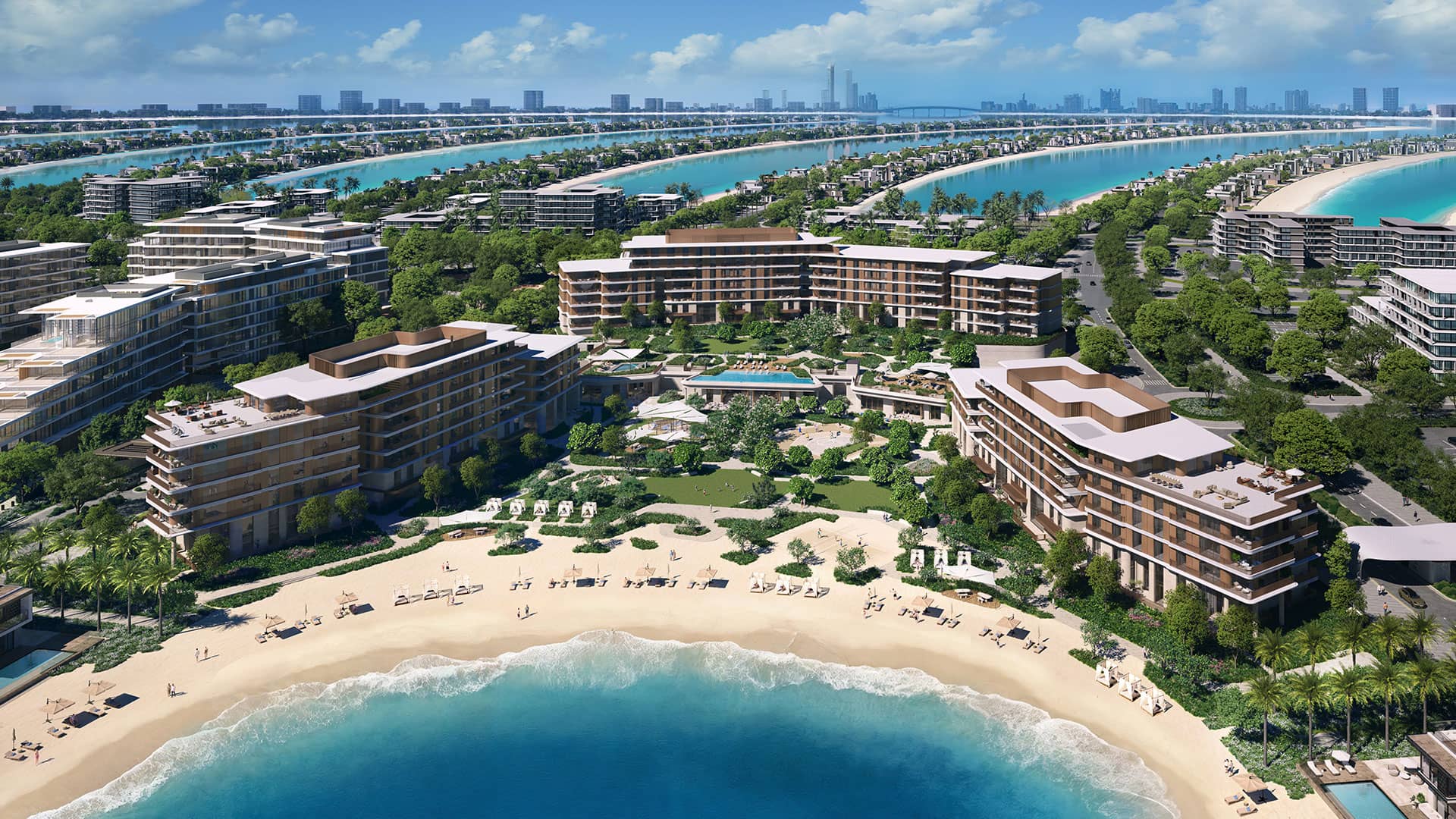
Palm Jebel Ali is one of the largest reclamation projects Dubai has ever attempted. It spans over 10.5 million square metres across 16 fronds and seven surrounding islands, pushing roughly 110km of brand-new coastline into the Gulf — around twice the footprint of the original Palm Jumeirah. The whole thesis is that a great deal of new beachfront is being brought to market at once, at launch-phase pricing, on an island the city is still building outward toward.
Jumeirah Bay Island is the mirror image of that idea. Shaped like a seahorse and linked to the Jumeirah mainland by a short bridge, it is a compact, self-contained enclave — closer to the size of an exclusive neighbourhood than a district. Its value doesn't come from how much it offers; it comes from how little. The address is finite, fully planned, and already anchored by the Bulgari Resort and Residences. Scarcity is the entire product.
So the two islands sit at opposite ends of the same luxury spectrum. Palm Jebel Ali offers breadth — range, choice, and a long runway of appreciation as the island matures. Jumeirah Bay offers concentration — a small, established, hard-to-enter address where the constraint itself is what holds the value.
“Palm Jebel Ali sells you a position on a coastline still being built. Jumeirah Bay sells you a seat at a table that's already full.”
Product: a whole island versus a handful of addresses
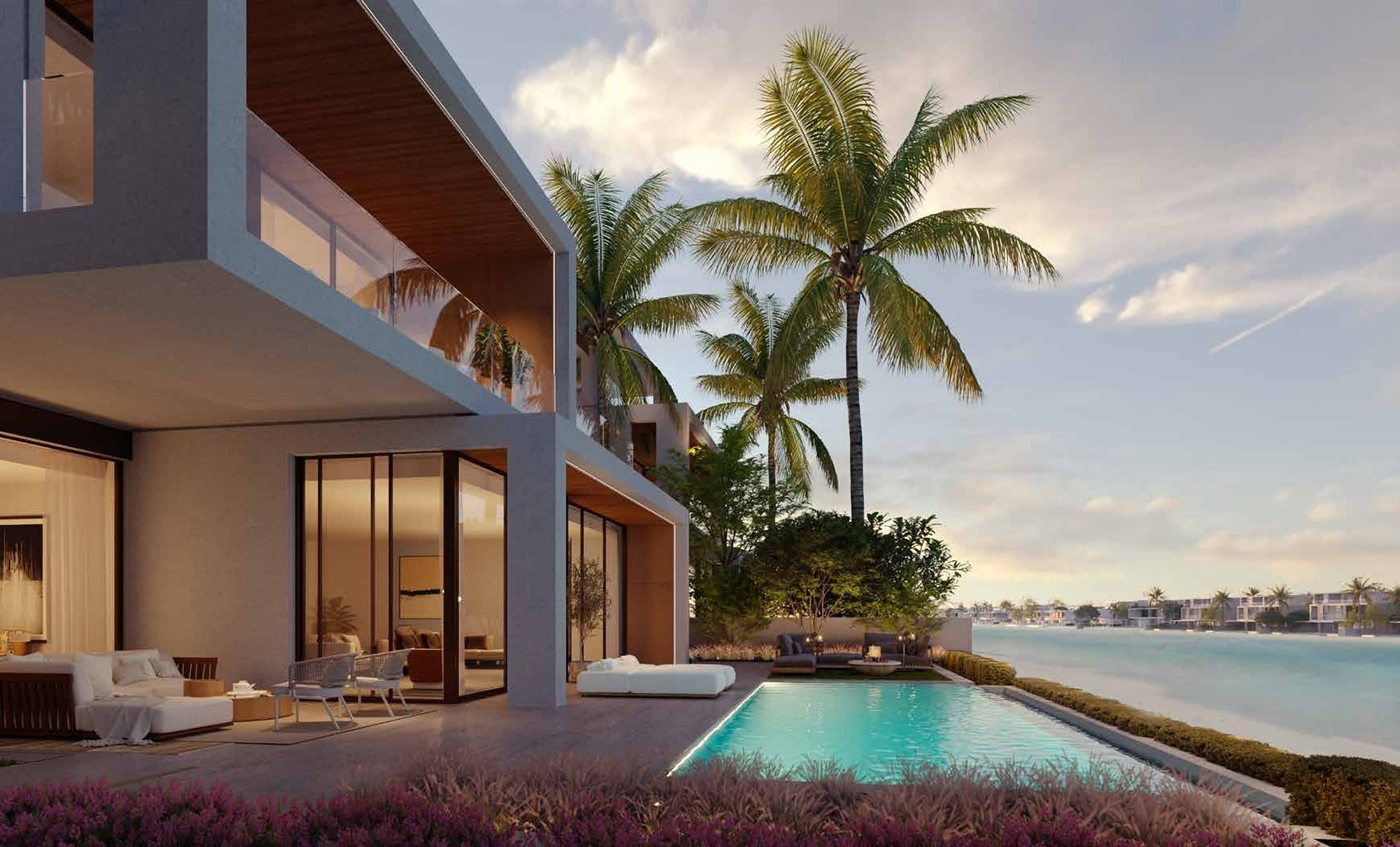
On Palm Jebel Ali, the product is deliberately wide. The island opens with three launched collections that span the market: Palm Central Private Residences bring resort-style apartments, townhouses and penthouses; the Beach Collection delivers frond-front villas with private beach access; and the Coral Collection sits at the ultra-prime peak, seven-bedroom signature mansions on the rarest outer fronds. One island, in other words, holds an entire ladder of ownership — from a AED 2.5M apartment to a signature mansion.
Jumeirah Bay's product is the opposite: narrow and curated by design. It is defined by a small number of ultra-prime addresses — the Bulgari-branded resort, residences and marina at its heart, alongside a limited run of villas and mansions. There is no entry rung and no volume play; the island was never meant to offer one. What it offers is a handful of homes carrying one of the most rarefied names in luxury, on a completed island where the scenery is finished and the neighbours are already in place.
That difference shapes who can act. On Palm Jebel Ali you choose your altitude — buy in at apartment level or reach for a mansion. On Jumeirah Bay, effectively, there is only the top of the market, and only when something rare comes available.
Two islands, side by side
The clearest way to read the choice is to line up what each island actually is — not on price, but on scale, stage and character.
Breadth · upside · long horizon
Palm Jebel Ali — scale, off-plan
Nakheel's 16-frond mega-island, roughly twice the size of Palm Jumeirah, with around 110km of new coastline. Sold off-plan at launch pricing across three collections, from apartments to ultra-prime mansions, on a phased handover.
Concentration · certainty · finite
Jumeirah Bay Island — scarcity, established
Meraas's seahorse-shaped micro-island off Jumeirah, completed and occupied. Anchored by the Bulgari Resort & Residences and a marina, with a finite run of ultra-prime villas and apartments. A finished, hard-to-enter address.
You buy early into growth
What Palm Jebel Ali gives you
A choice of entry points, launch-phase pricing set before the island's amenities come online, and a genuinely long appreciation runway as fronds fill in and Dubai's southern corridor matures around it.
You buy into a settled address
What Jumeirah Bay gives you
A completed, proven, walk-in address with the Bulgari name attached, established neighbours, and the security of buying something that already exists in a location the market has long since priced.
Location and setting
Jumeirah Bay sits close to the historic centre of prime Dubai — just off the Jumeirah coast, minutes from the beaches, boutiques and old-money districts that have defined the city's premium residential market for years. It is central, connected, and surrounded by an area that is already fully built and desirable. You are buying into the established heart of the city.
Palm Jebel Ali sits on the opposite side of the story: Dubai's southern growth corridor, beside Jebel Ali, tied to the mainland by three access points straight onto Sheikh Zayed Road. Al Maktoum International (DWC) is roughly 20 minutes away and Expo City is minutes down the road — an area the city is actively building toward rather than away from. Central Dubai versus emerging Dubai is another way to read the whole comparison: Jumeirah Bay is where the market already is, Palm Jebel Ali is where a large part of it is heading.
Maturity: finished versus in the making
Jumeirah Bay is done. The island is complete, its landmark buildings operate, and its residents are in place. When you buy there you can view the exact home, understand precisely what surrounds it, and move in — with all the certainty, and the settled pricing, that a mature address carries. There is little left to imagine and little left to build.
Palm Jebel Ali is the reverse: a landmark in the making. Homes are sold off-plan against a master plan, with handovers phased across the coming years and the island's hotels, marinas and beach clubs still ahead of it. That means real construction and timeline risk — capital committed years before the keys — but it is also the source of the upside. You are buying at launch-phase pricing, ahead of the island's own completion curve, in a way that is simply not possible on a finished island like Jumeirah Bay.
Pricing
The two islands price on entirely different logics, which is why a straight number-for-number comparison misleads. Jumeirah Bay is a mature, resale-driven ultra-prime market: the Bulgari residences and the island's villas trade at some of the highest per-square-foot figures in Dubai, set by scarcity and an established address rather than any launch list. Those are qualitative, market-driven prices — a function of how few homes exist and how rarely they change hands.
Palm Jebel Ali, by contrast, publishes launch-phase pricing across a defined ladder, staged over an 80/20 payment plan rather than settled up front. That spread — from apartments through frond-front villas to signature mansions — is what lets a buyer choose their level. The collections below show where today's launch pricing actually starts.
Palm Jebel Ali — launch pricing today
Three collections span the entry spectrum, from resort-style apartments to ultra-prime signature mansions. These are off-plan, staged over an 80/20 payment plan.
Who each island suits
Jumeirah Bay suits the buyer who wants the finished article: a completed, central, ultra-prime home with a globally recognised name attached, no construction to wait through, and the certainty of an established address. It rewards those who value scarcity and settledness over runway — buyers content to pay a mature market's prices for something rare that already exists, when a home there happens to become available.
Palm Jebel Ali suits the buyer with a longer horizon and an appetite for scale. It fits those who want to choose their entry point, commit capital in stages against a master plan, and own a piece of Dubai's next flagship island before it is proven — whether that's an apartment on the water or a mansion on an outer frond. It rewards conviction about the city's southern trajectory rather than the desire to move in tomorrow.
Neither is the 'better' island in the abstract. One is a finite jewel-box you buy for its scarcity; the other is a vast new coastline you buy for its trajectory. The right answer depends entirely on which of those you're actually looking for — which is the conversation worth having before you commit to either.
Frequently asked questions
What's the main difference between Palm Jebel Ali and Jumeirah Bay Island?
Scale and stage. Palm Jebel Ali is Nakheel's off-plan mega-island — 16 fronds, around 110km of new coastline, roughly twice the size of Palm Jumeirah — with a full ladder of collections from apartments to mansions. Jumeirah Bay Island is Meraas's small, completed, seahorse-shaped enclave, a finite run of ultra-prime addresses anchored by Bulgari. One is scale and upside; the other is scarcity and certainty.
Which island is more exclusive?
They're exclusive in different ways. Jumeirah Bay is exclusive by scarcity — a tiny, completed island with very few homes and the Bulgari name attached, where the constraint itself holds the value. Palm Jebel Ali's exclusivity is concentrated at its top end: the outer-frond Coral Collection mansions are among the rarest addresses on a much larger island that also offers more accessible entry points.
How much does it cost to buy on Palm Jebel Ali versus Jumeirah Bay?
Palm Jebel Ali publishes launch-phase pricing: from around AED 2.5 million for Palm Central apartments, from about AED 18.5 million for Beach Collection villas, and from roughly AED 30 million for Coral Collection mansions, staged over an 80/20 payment plan. Jumeirah Bay is a mature resale market that trades at some of the highest per-square-foot prices in Dubai, set by scarcity rather than a launch list.
Is Jumeirah Bay Island completed?
Yes. Jumeirah Bay is an established, completed island off the Jumeirah coast, anchored by the Bulgari Resort and Residences, with residents already in place. Palm Jebel Ali, by contrast, is under construction and sold off-plan, with handovers phased across the coming years.
What is Jumeirah Bay Island known for?
Its seahorse shape, its small size, and the Bulgari Resort, Residences and marina at its heart. Developed by Meraas and linked to the Jumeirah mainland by a short bridge, it is one of Dubai's most concentrated ultra-prime addresses — valued precisely because so few homes exist there.
Which island should I buy on?
It depends on what you want. Choose Jumeirah Bay if you want a finished, central, ultra-prime home with a globally recognised name and no construction to wait through. Choose Palm Jebel Ali if you have a longer horizon, want to pick your entry point, and want to own a piece of Dubai's next flagship island at launch-phase pricing before it's proven.
Weighing scale against scarcity?
Tell us what you're really after — a finite, finished address or a position on Dubai's next flagship island — and we'll give you a straight read on where Palm Jebel Ali fits.